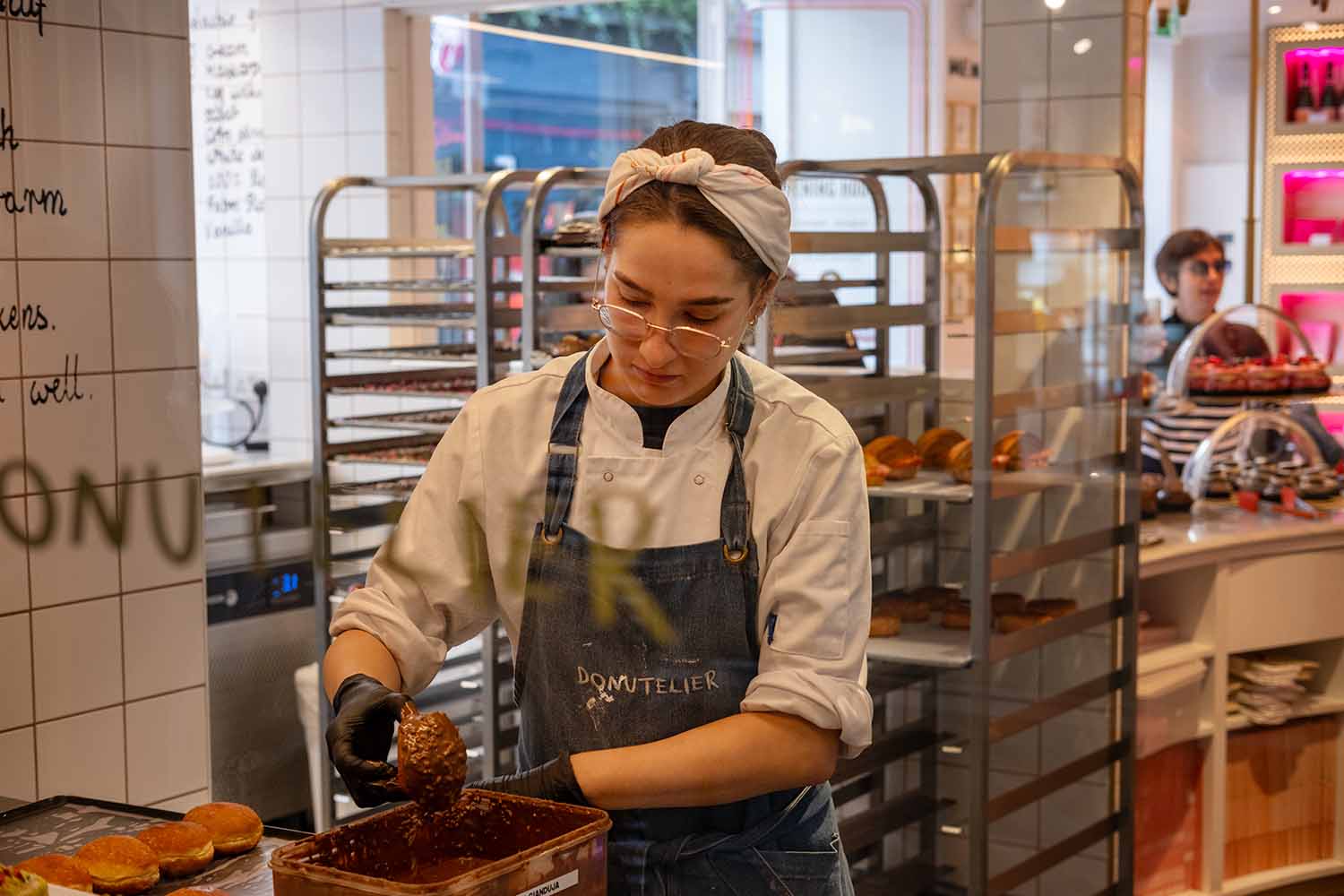
It’s a thing, isn’t it, to have artisan craftspeople working in view of the passing public. It does its job of arresting people who would otherwise pass without slowing, and of telling customers that their goods are the real deal, made on the premises.
Maybe it all opens up premises that would otherwise not have a back room or a basement or upper floor to locate the working space.
I think pizza places were the first I can recall that brought the pizza ovens and the mixing and kneading into the public space.
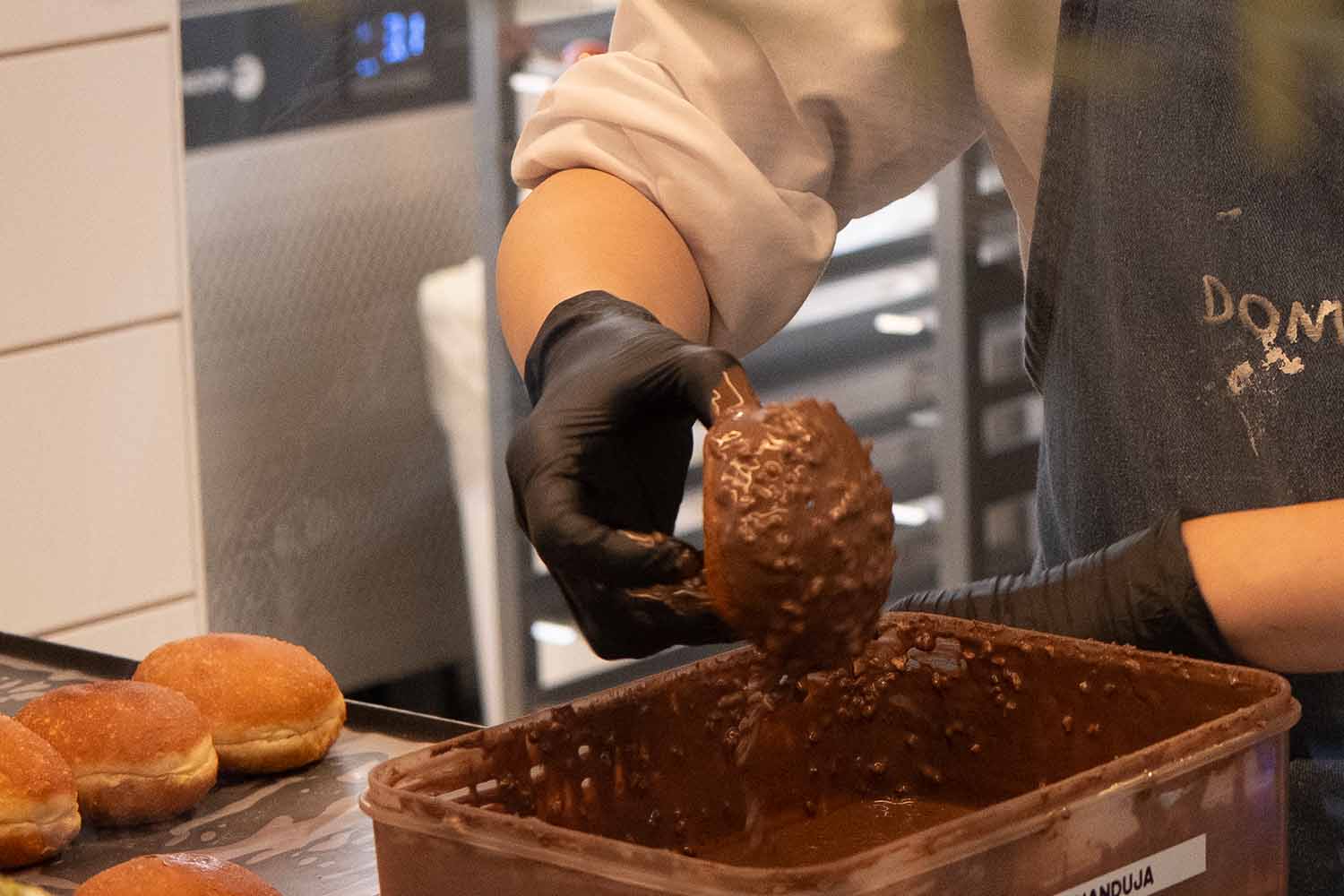
So now to Donutelia. A bit of sleuthing showed which donut the woman is working on. You can see the letters ANDUJA on the tin into which she is dipping the donut. And that means it is Rochers Gianduja.
It cannot be any of the other Donutelier flavours, which are Spiced Apple Tutu, Berry Glissé, Pistachio Pirouette, Double Chocolate Sprinkles, Pistachio, Carnaby Toffee Pudding, St Honoré, Chocolate Pretzel, Vanilla Cookie Cream, Black Forest, or Vanilla Pecan.
It can only be Rochers Gianduja. And according to intensive research, the meaning of the name is made up of:
Rocher – from the Ferrero Rocher chocolate that looks like a hazelnut-covered rock.
Gianduja – an Italian chocolate confection from Piedmont, made by blending chocolate with finely ground hazelnuts, creating a creamy, nutty paste with an intense hazelnut flavour that is achieved by toasting and grinding local Piedmontese hazelnuts with cocoa.
If you are wondering how Gianduja is pronounced, it is a soft g, like a letter j, as janduja.
So now we know.
The $64,000 question is whether I have tasted one. To which the answer is, not yet. But it is calling, whispering sweet nothings.