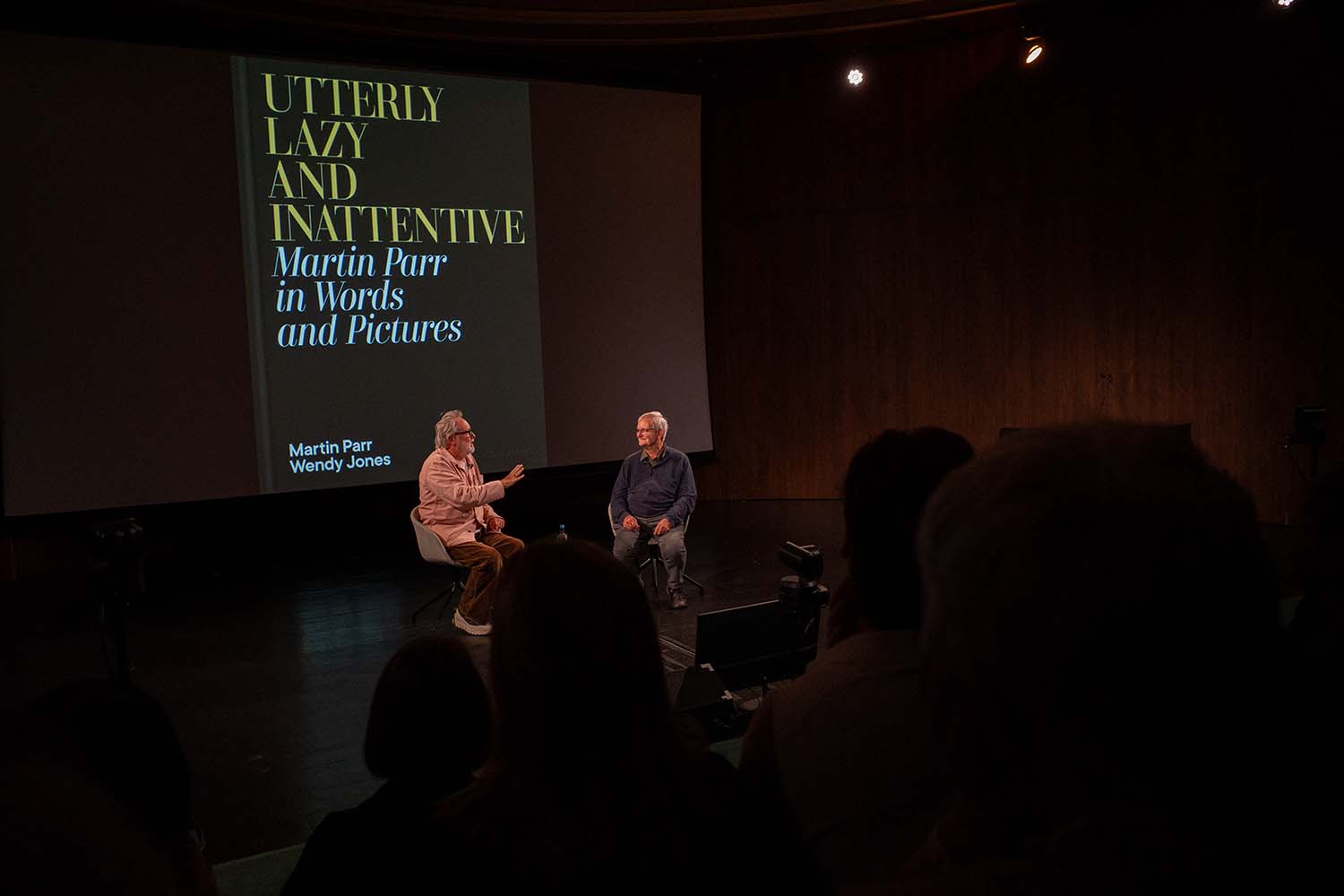
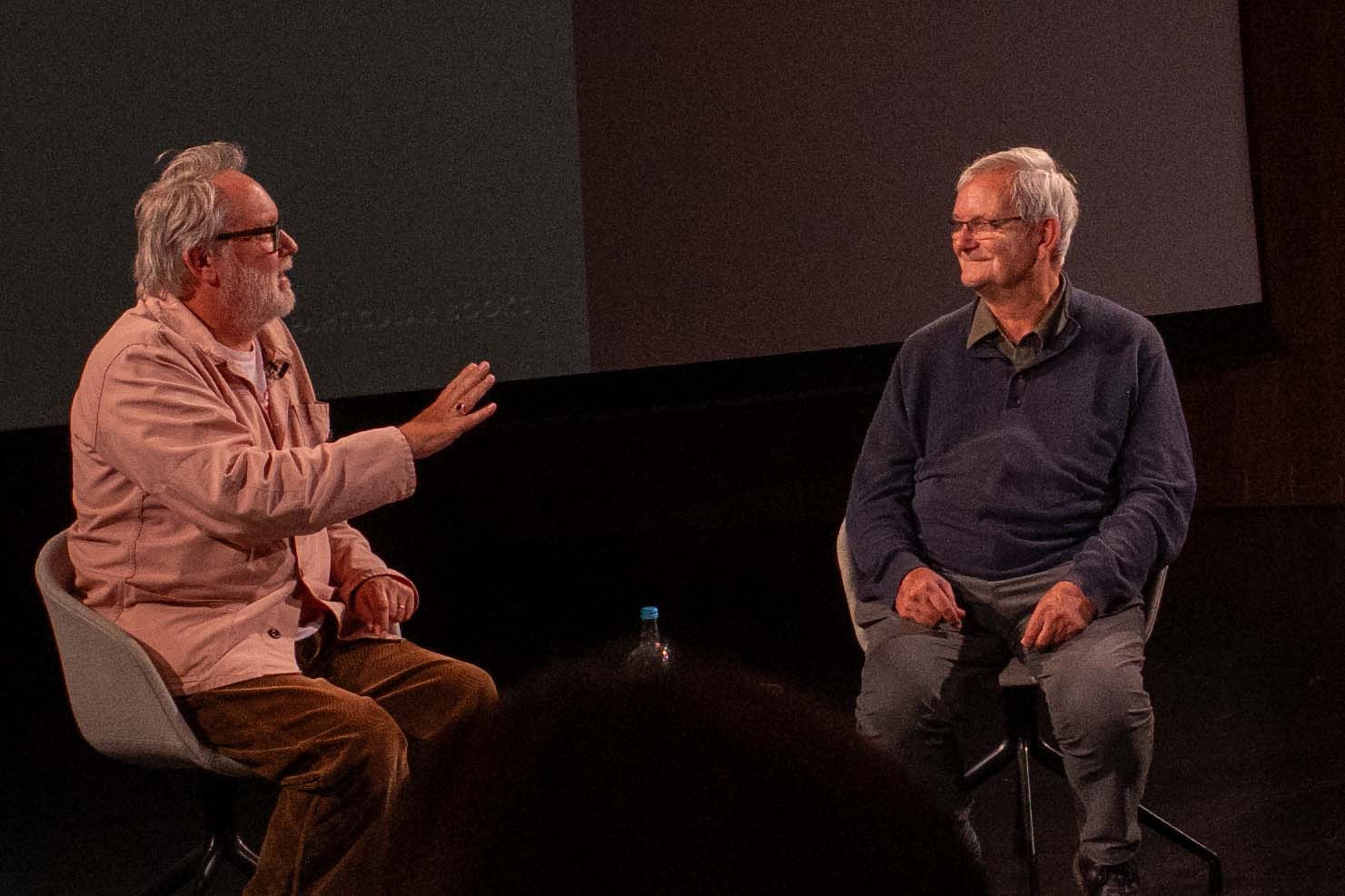
He was never a photographer I admired except for the way he got into places. In one photo he is behind the counter where the woman is serving ice cream. She is turned to look at him and behind her on the other side of the counter are all these kids, so it is at lido or at the beach.
He may have told her he wanted to photograph the kids, but she is in the photo as well, and she is really the focus of it. She is obviously not a model, although Parr did photograph models, commissioned to advertise their clothes. and he put them into scenes. He is not the only one to do that.

The purpose of the interview from his point of view was to publicise his book UTTERLY LAZY AND INATTENTIVE.
The title comes from his school report for French.
It’s one thing to write ‘lazy and inattentive’ – and it is harsh. But to write ‘utterly lazy’ is on another level of observation, a kind of recognition that there is a brain in there.
Listening to him tonight, I felt empathy. He is clear that he is taking a long, hard, unflinching look at society and he is not apologetic for photographing whatever he finds interesting in the scene.
The interviewer asked him whether people confronted him, perhaps saying he was rude for photographing them as he did. He said yes they sometimes did.
And that little prick of a question made the interviewer’s other faults bearable because it is a question about Parr’s work that I have asked myself. I wouldn’t have said his work seems rude; I would have said it seems cruel.
He talked about the early years and then how he changed when he saw American photographers and started to shoot in colour.
He said “when I photographed in black-and-white, I was looking for community and when I changed to colour it was to critique society.”
Parr was interviewed by Vic Reeves. That’s his stage name when he was in a comedy duo with Bob Mortimer. His given name is James Moir and he goes by that now.
He was keen to tell Parr and the audience that he went to art school, and he missed half of what he could have asked by taking up time talking about himself. I kept wondering who decided to have him be the interviewer.
His ‘hogging the limelight’ style of interviewing turned out to be a blessing, however, because Parr had to stand his ground, which he did . At the end, Reeves kept trying to get Parr to agree that everything inventive started in Britain and was taken over by the USA,
Parr disagreed, and when Reeves pushed it again, Parr said with exasperation “I can’t take this.” and did so without losing his bonhomie.
And Reeves did get in that little question about Parr being rude. Maybe merciless would be a better word.
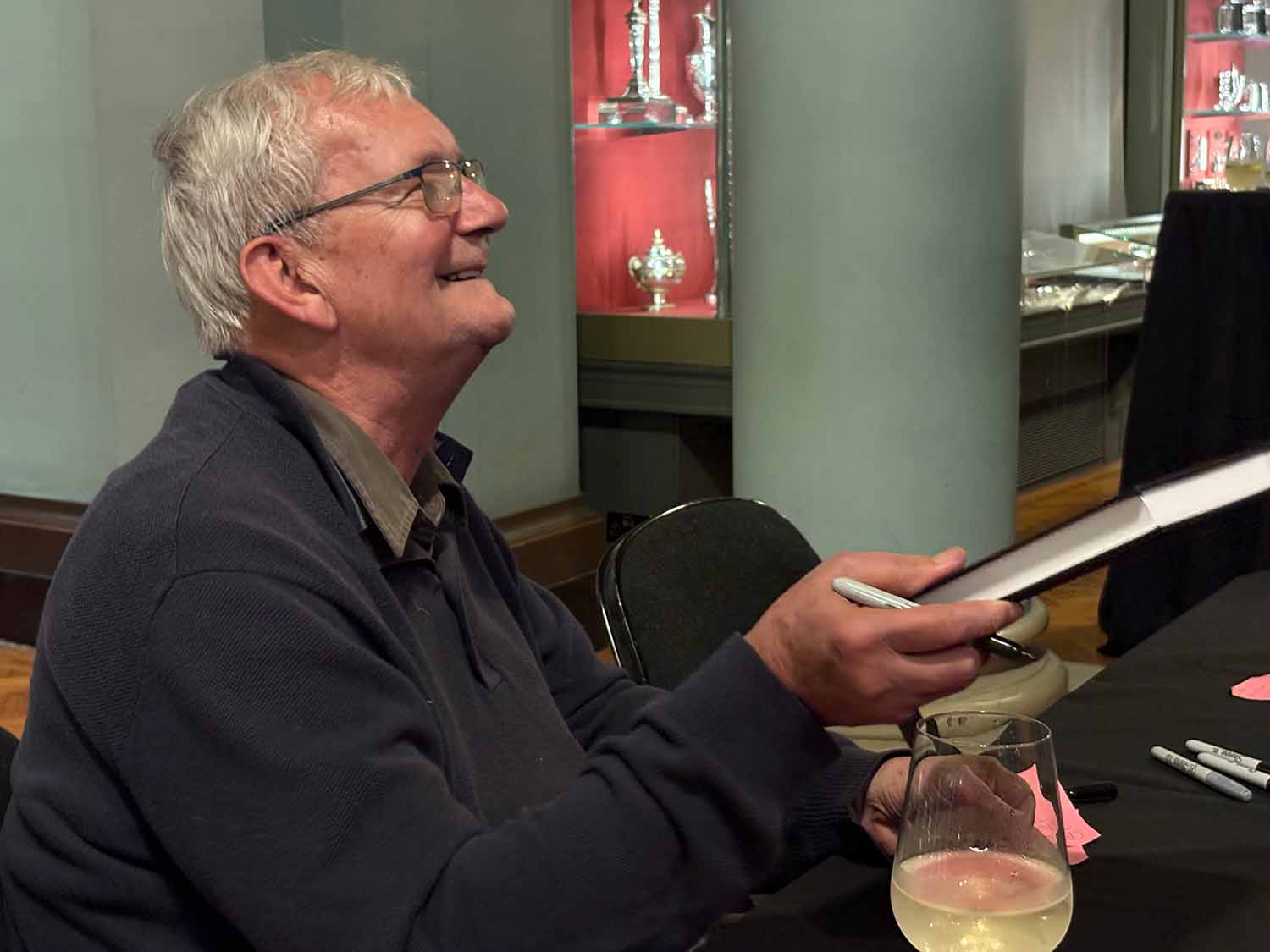
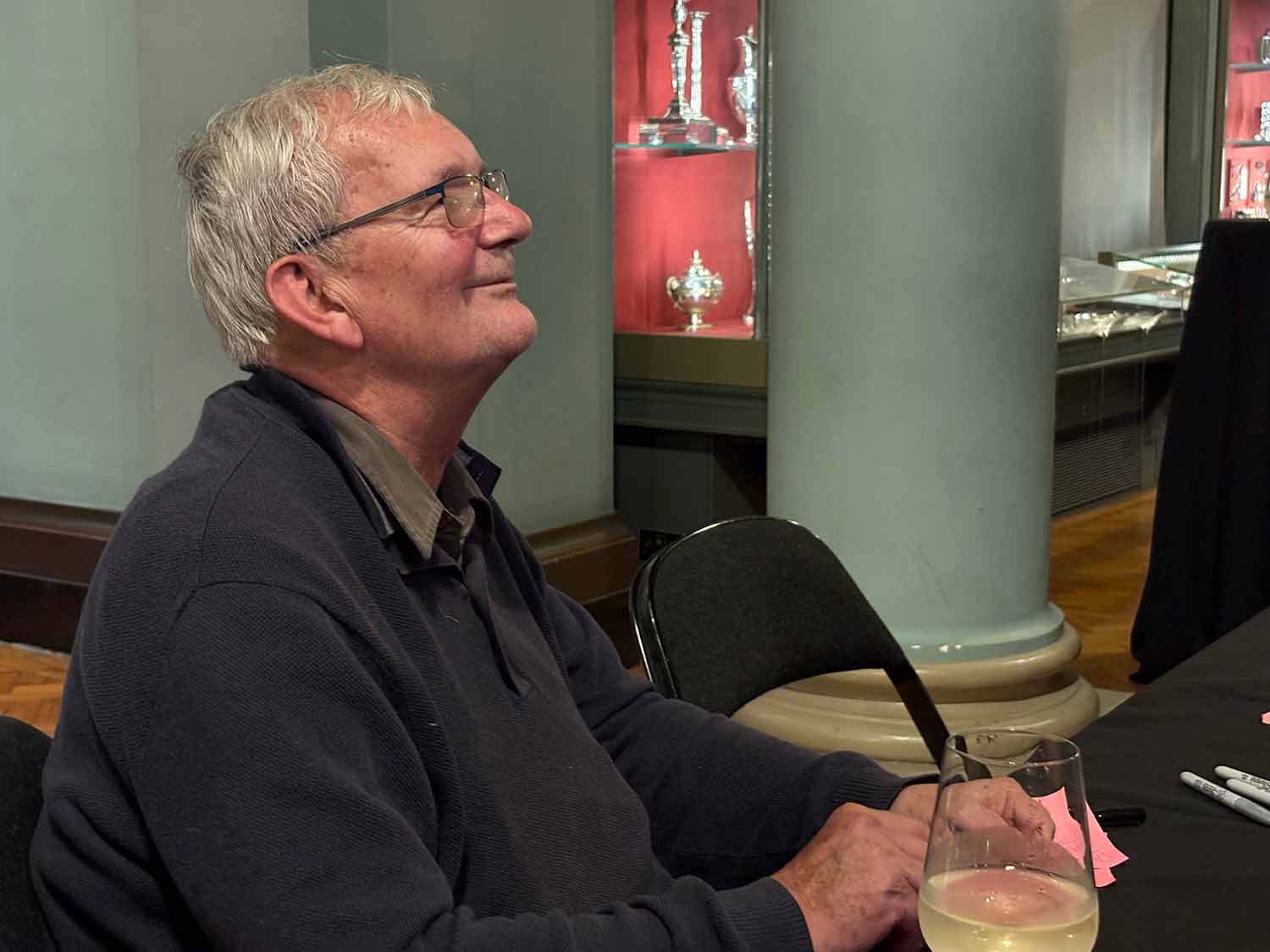
It’s been a good night for comparing how well the iPhone handled the poor lighting compared to the Ricoh GRIII that I also used. The two shots above are from the iPhone and these next two are from the GRIII.

Postscript
Parr’s unflattering photo of a woman sleeping by a white car (see the photo above) intrigued me. I thought I might be able to pin down the date from the headline in The Daily Telegraph. It’s indistinct but I think it says ‘SHEA GIVES PALACE BACKING and if so it is most probably about Michael Shea, the Queen’s Press Secretary.
So I went hunting but didn’t find the edition of the paper. But I found this quote. It’s from an article in ‘Blind’ magazine from May this year about an exhibition in Arles in France featuring Parr and Don McCullin.
To understand the quote you have to know that Magnum is an international group of photographers. The group started just after WWII and membership is by invitation only. The world’s most famous photographers are members.
Here is the quote from the article in ‘Blind’.
Cyril Drouhet: You actually caused a controversy when you joined the Magnum agency.
Martin Parr: When I was in the running to join Magnum, half the photographers threatened to leave the agency because, according to them, I didn’t represent the humanism of the photographers who had historically made it up. Starting with Cartier-Bresson. That taught me one thing: if people hated me so much, it meant that I was on the right track.
I wonder whether Parr did use the word ‘humanism’. The interviewer, Jonas Cuénin, is French, and I think that Parr would have said ‘humanity’. But either way, the point is well made that one way to look at what others objected to was that they were sugar coating life and Parr wasn’t.
On the other hand, these are famous photographers, some of whom have photographed armed conflicts, riots, mass shootings and who knows what else, so if they think he’s a prick, then maybe they have a point.
I am persuaded both ways.
Timelapse Video
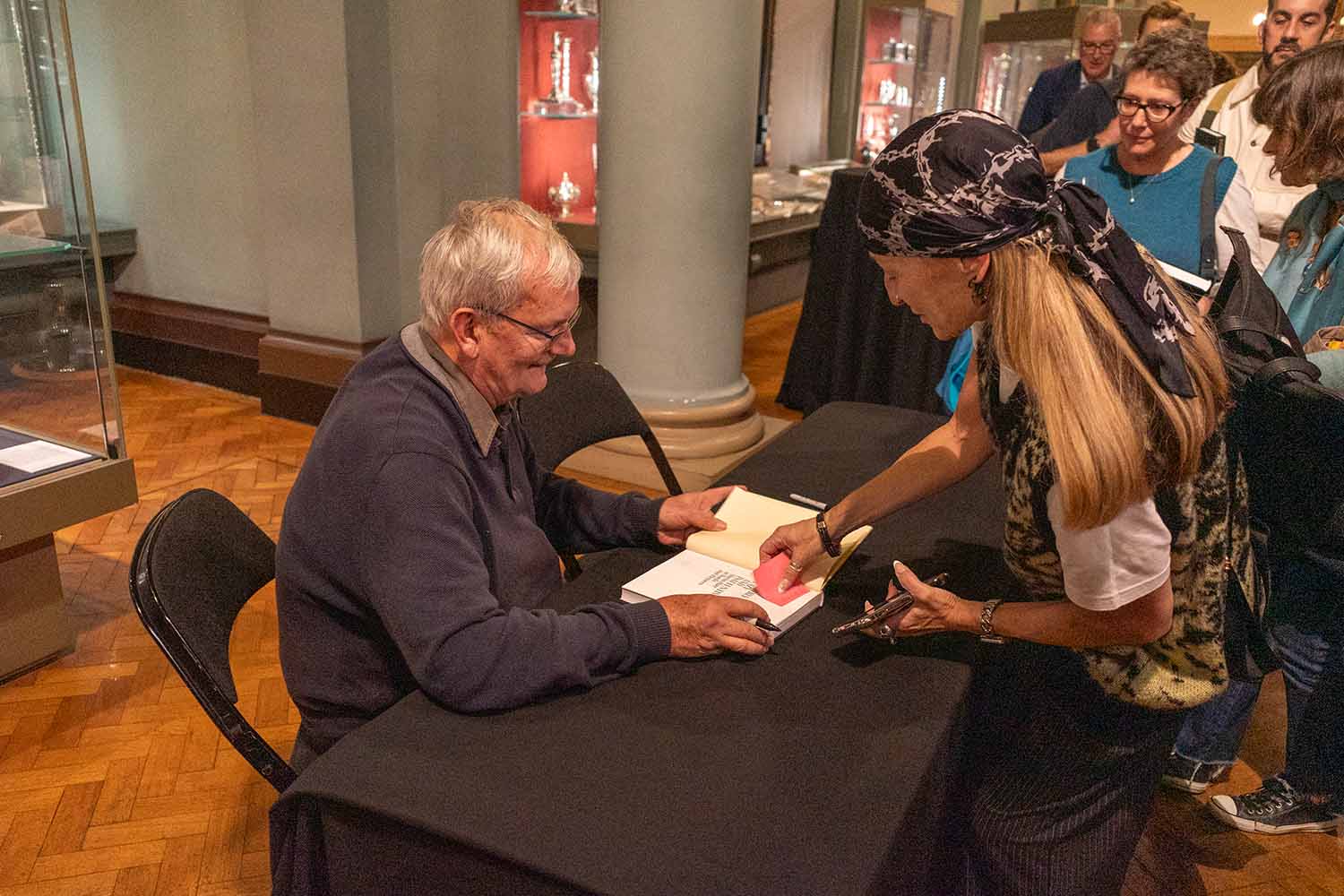
As Parr was signing books, I photographed him again and again with my phone. I didn’t think of linking the images until I was scrolling through them, and then I decided to turn them into this time-lapse. I added a title ‘This is Martin Parr‘ to one of the JPEGs with Photoshop and then strung the images together in iMovie. Then I used Handbrake to turn the .mov file into a smaller MP4 file and uploaded to YouTube.
I enjoyed doing it because I got the feeling with Parr that he is very open and you see the different colours of his personality as he interacts.


