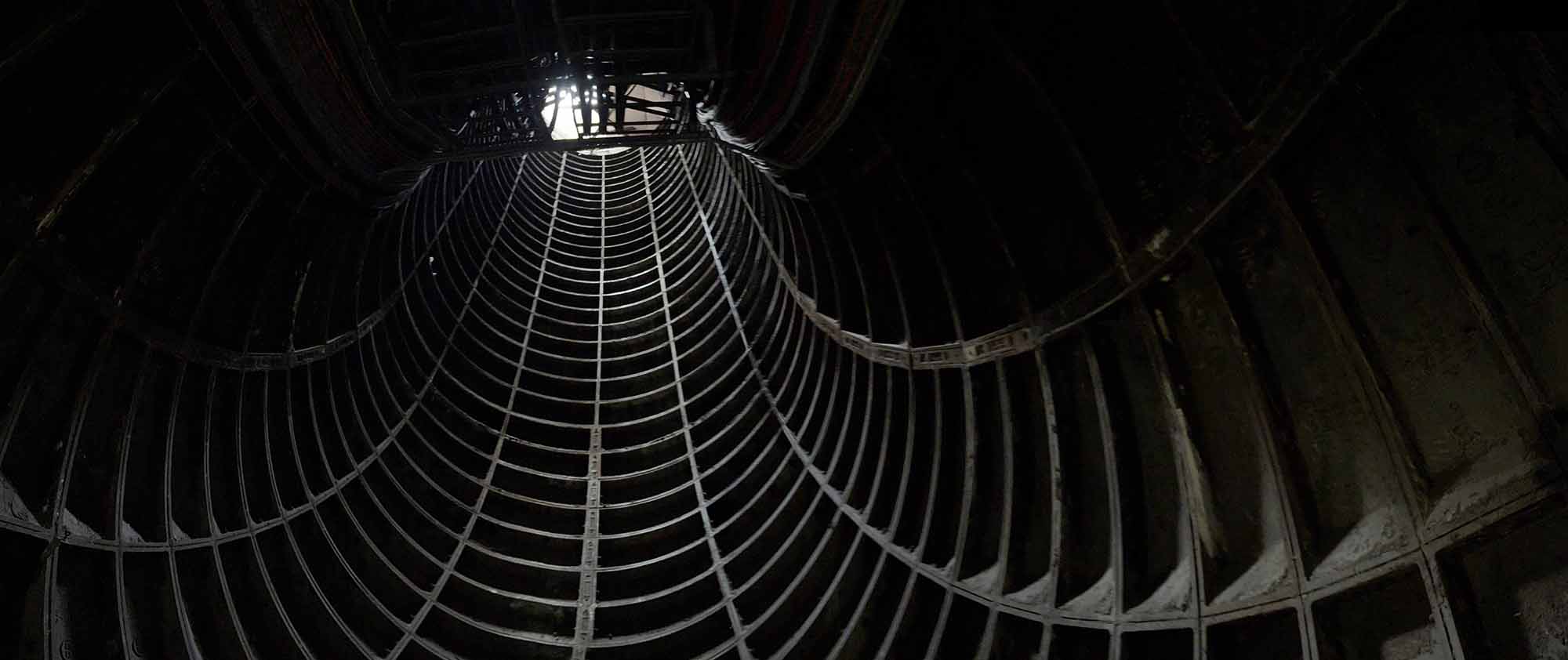
The first trains on the London Underground were steam powered, so shafts open to the sky were put in the tunnels at intervals along the line to let the steam and smoke out and keep the temperature down.
New lines powered by diesel-electric trains were built with each end of the line at ground level. That way, the air in the tunnels is refreshed by the trains themselves s pushing air from above ground through the tunnels.
Tamara and I went on a tour of Hidden London. We had a chance to see the old Dover Street station that was just a couple of streets away from where Green Park Underground station is now.
The tour included seeing and standing inside one of the huge ventilation shafts, and the photo at the top of this article is looking up the curve of the ribbed tunnel to ground level way above.
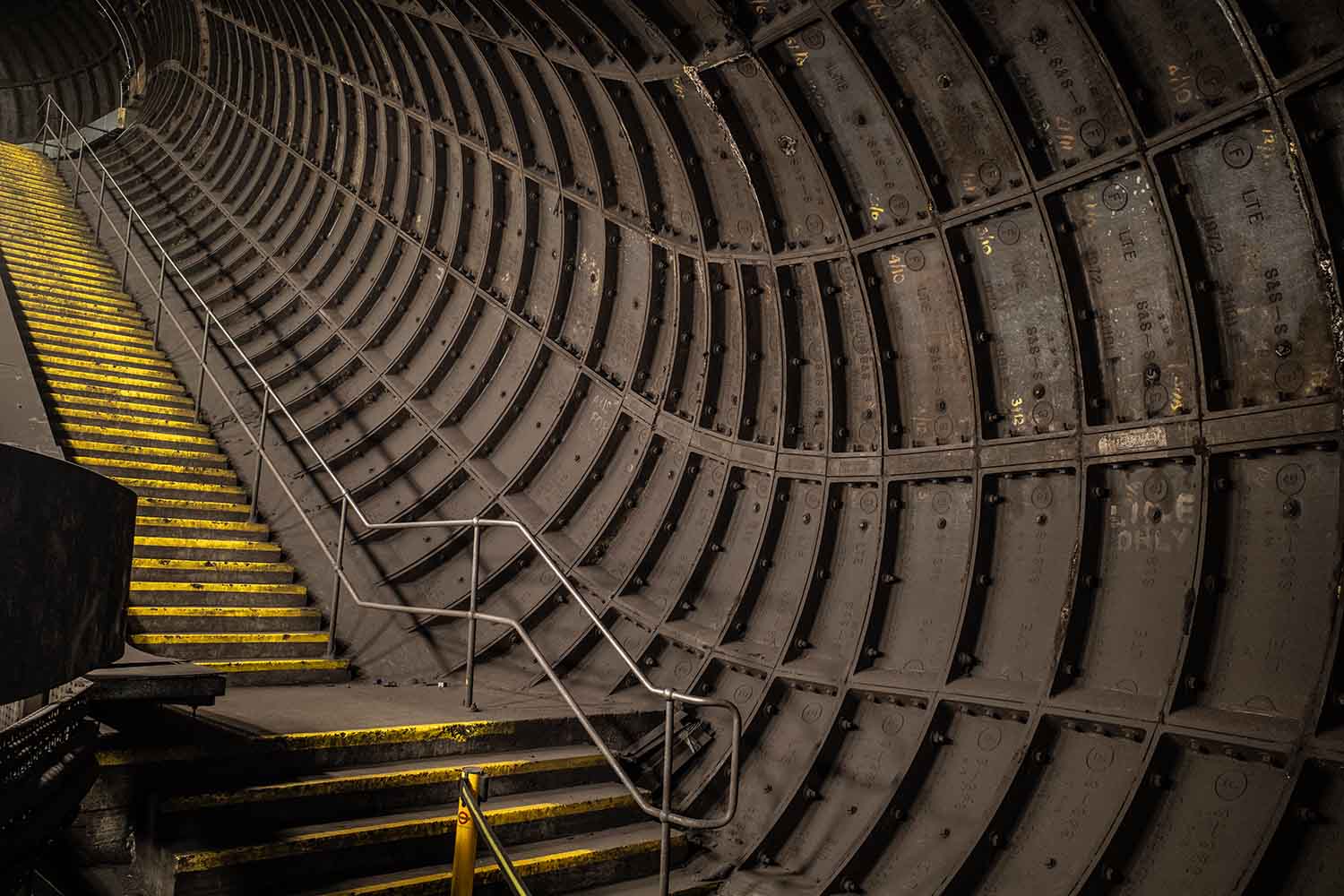
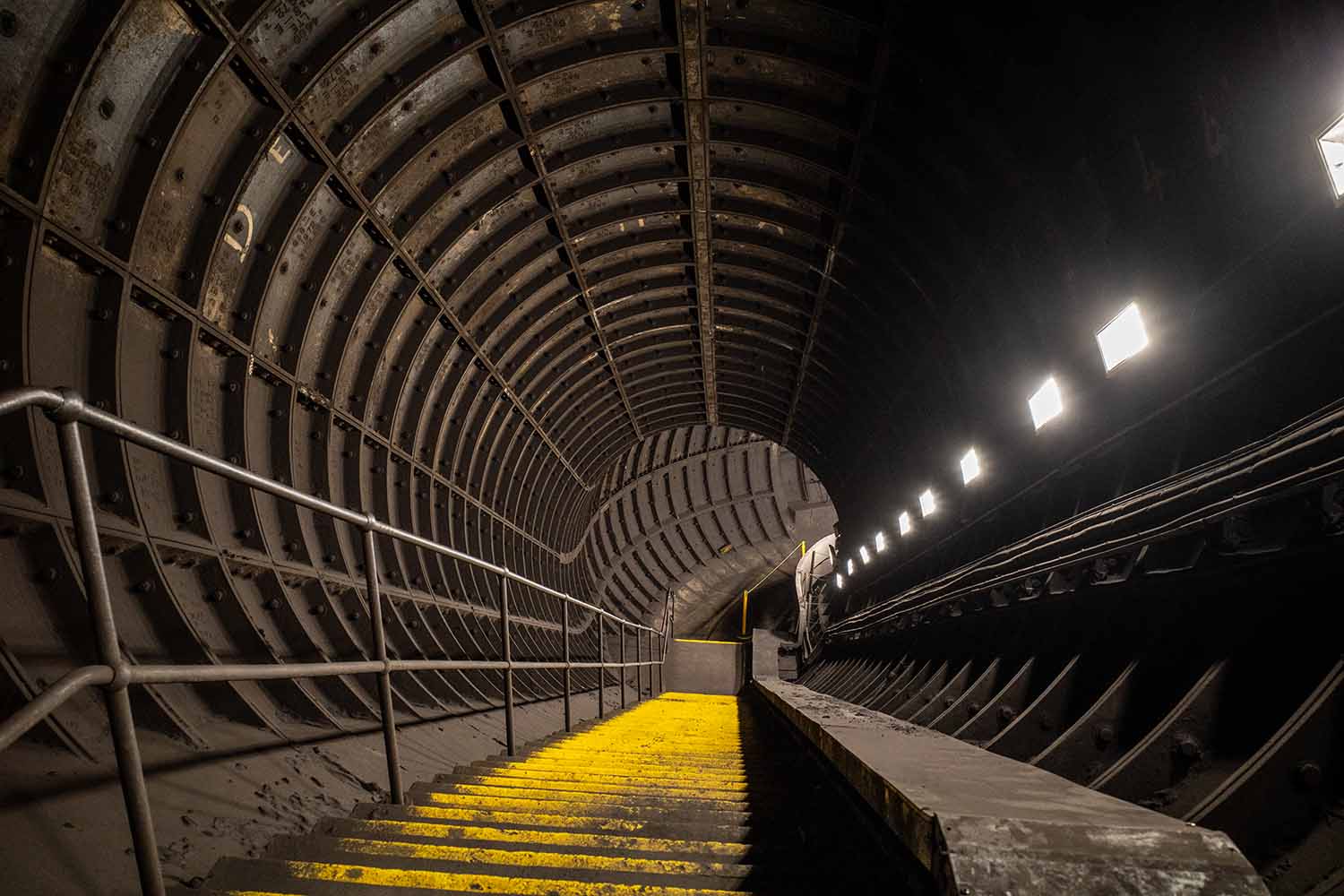
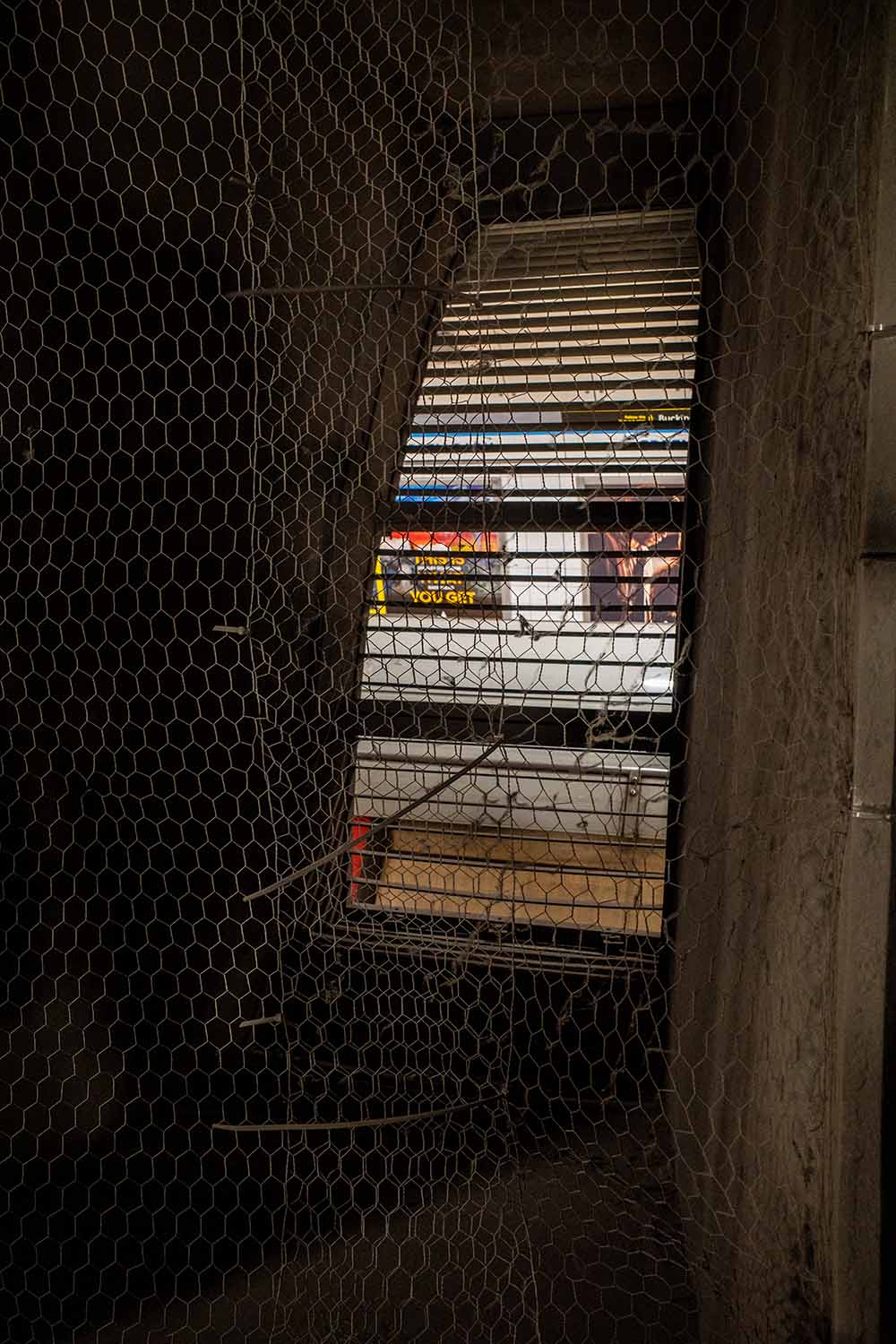
These next photos are first, looking up the 54 steps to the level of the ventilation channel that is above the active railway line. Then looking down those stairs and then looking down on the current tube line. Finally the Buckingham Palace entrance to Green Park station.
The Green Park
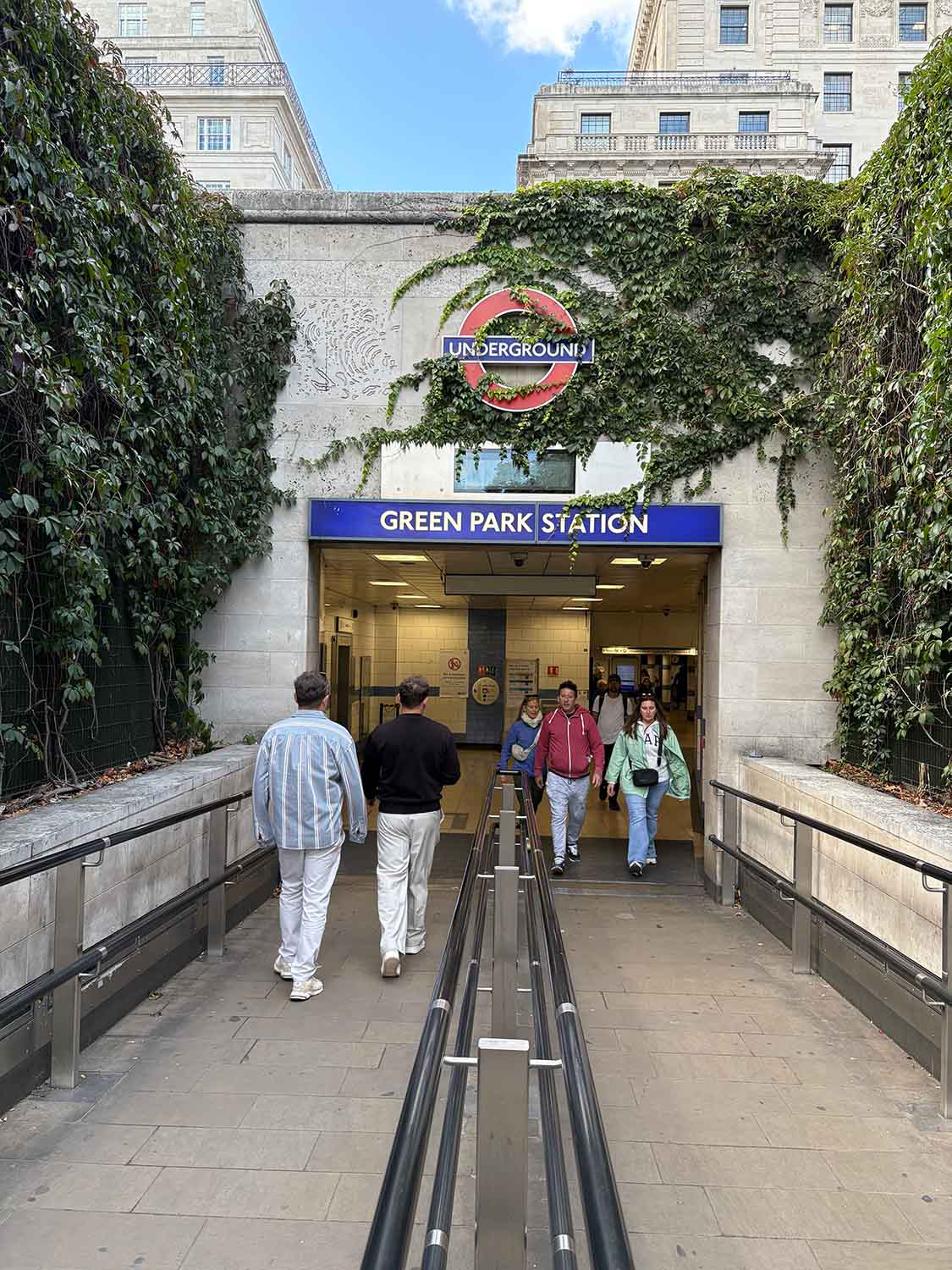
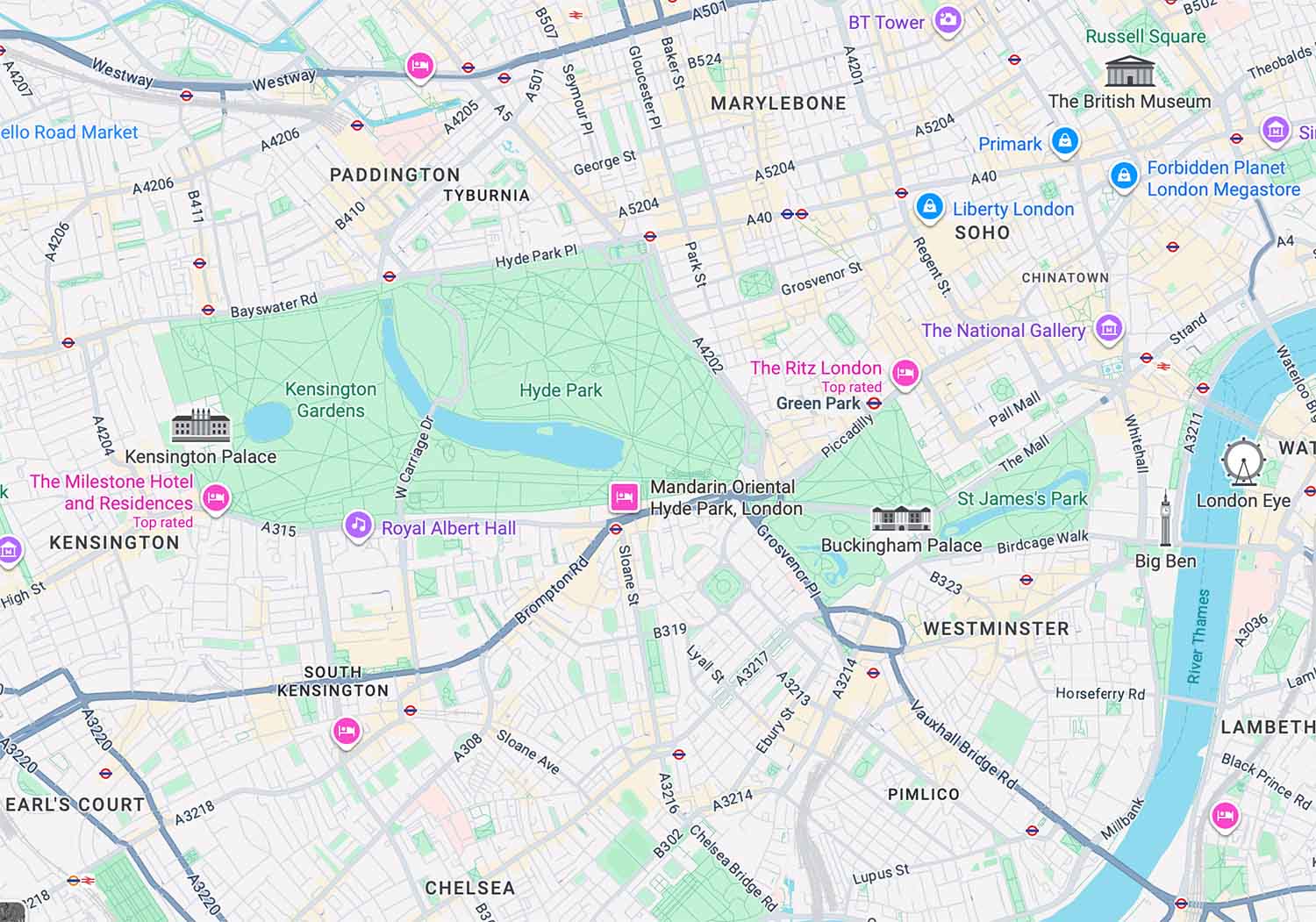
This next photo is looking at the entrance to Green Park station on the south side of Piccadilly. There is another entrance on the north side, right on the street, This south entrance is actually in Green Park. and if I were to turn around and walk south for about 750 m and I would be standing outside Buckingham Palace.
The reason The Green Park exists at all is that King Charles II wanted to walk from Hyde Park to St. James’s Park without leaving royal soil. Nowadays he would have to cross Piccadilly.
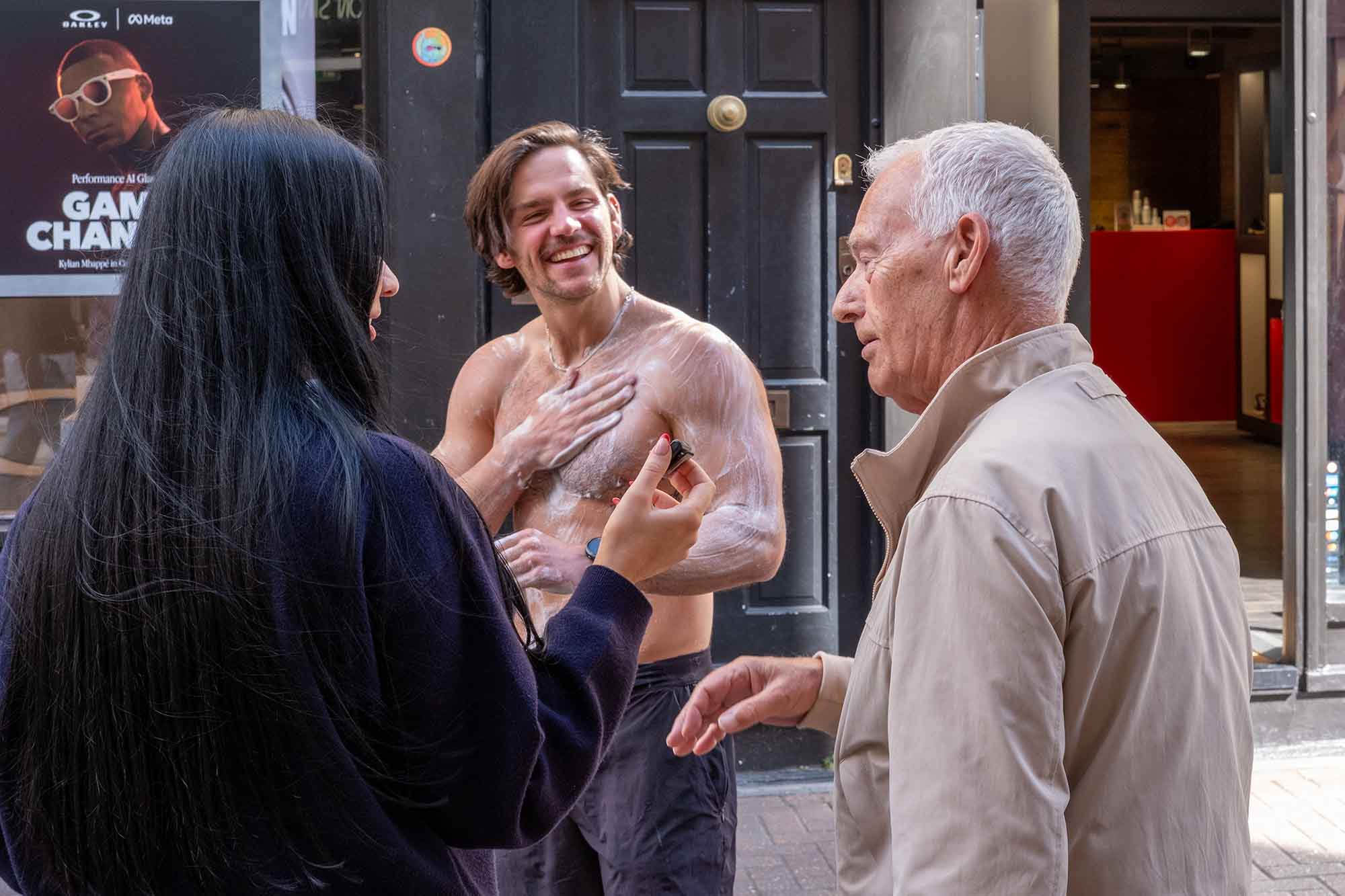
On my way to meet a friend I walked down Carnaby Street and saw this man who seemed to be covering himself with grease or perhaps lathering himself. The woman with him was interviewing this passer-by who I think was a tourist, perhaps from Italy.
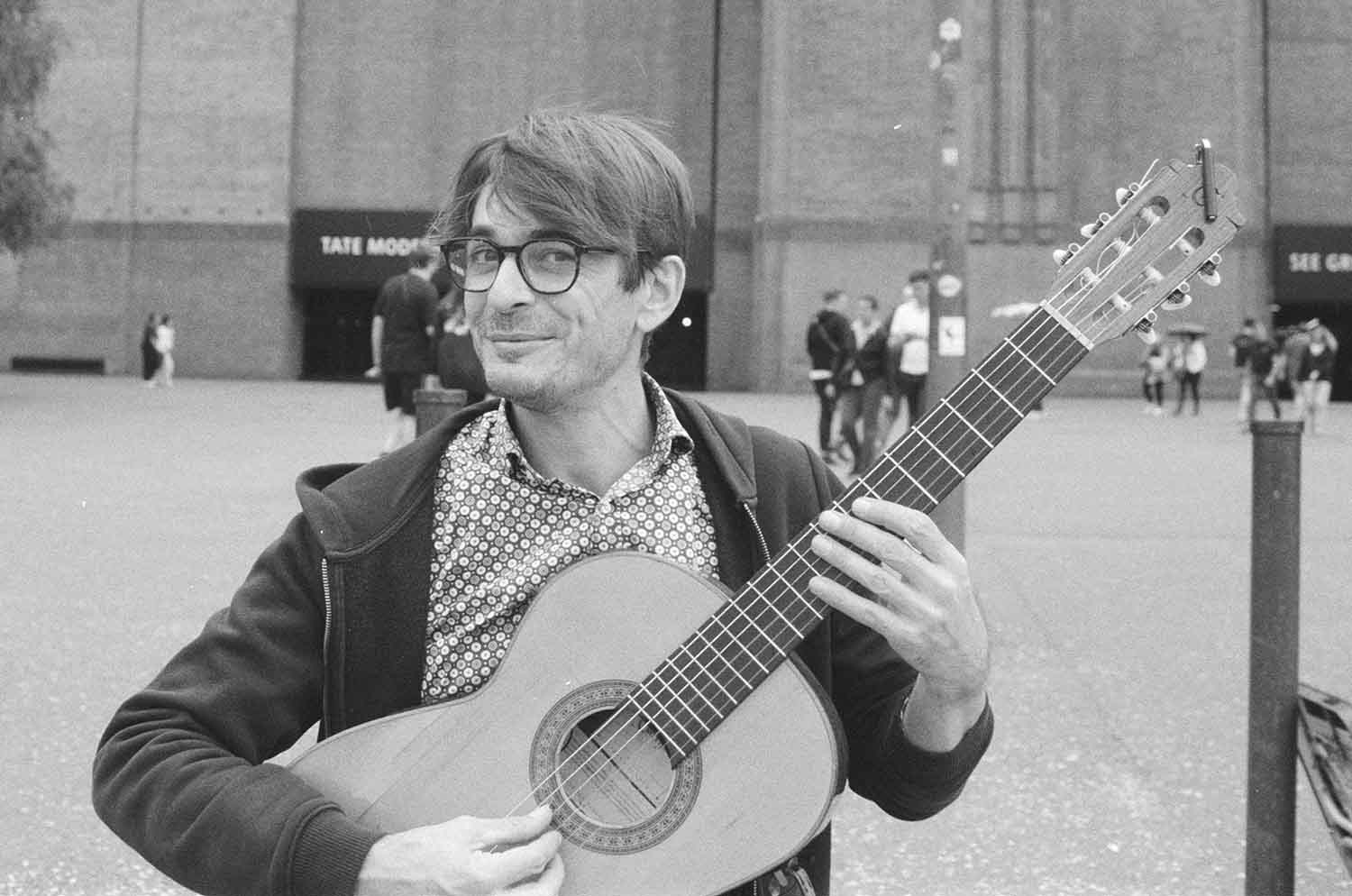
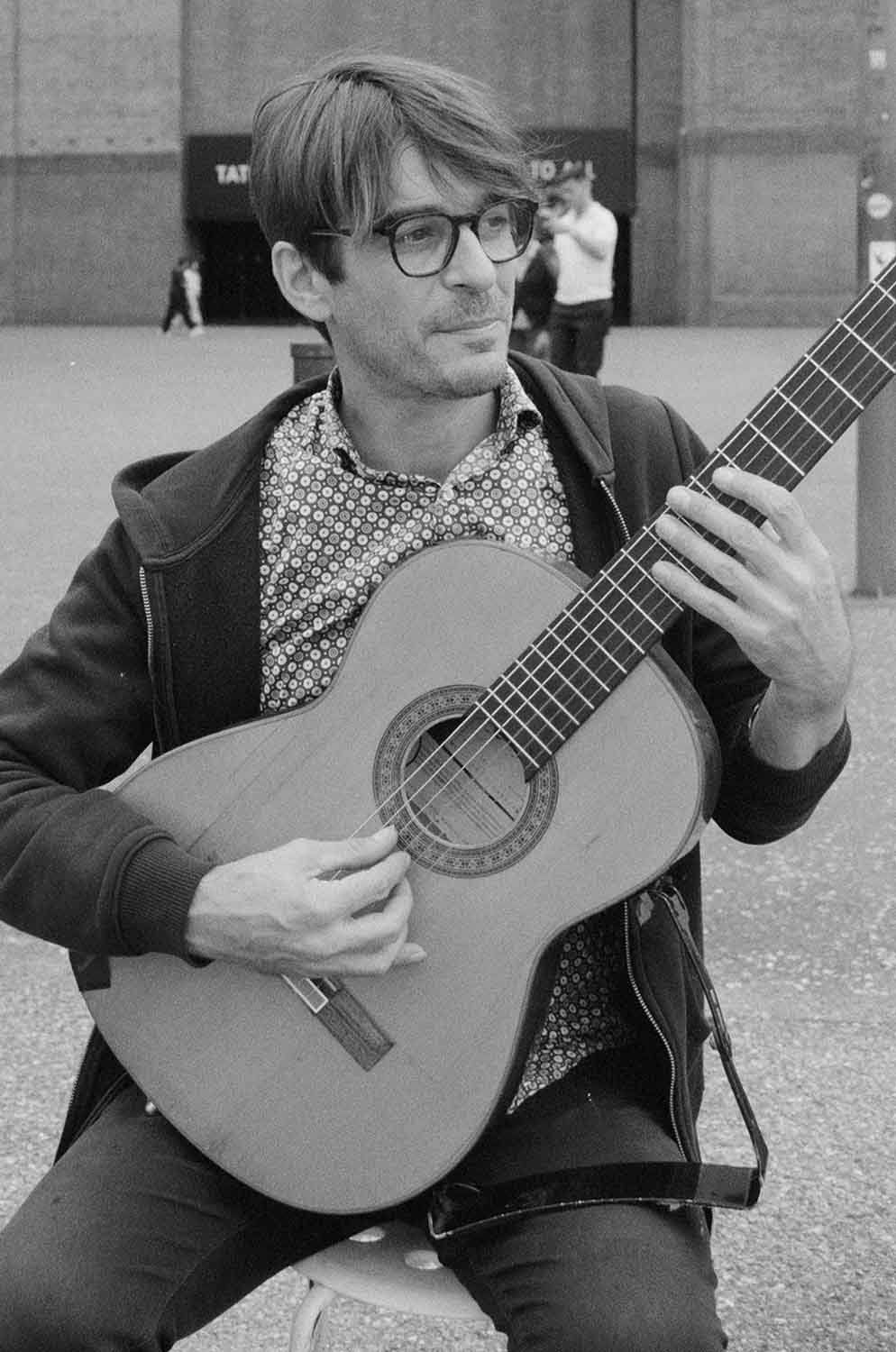
The guitarist is Sebastian Diez, and he was playing a Paco de Lucia piece outside the Tate Modern. The third shot is in Borough Market and I was attracted to the way the older man was tagging along holding onto the other man. At first I thought the older man might be a bit out of his depth. And then I thought maybe this was a system they used so the older man could guide the man with the 360° camera when he was videoing.
Although I shoot nearly all digital, I still like to shoot film from time to time.
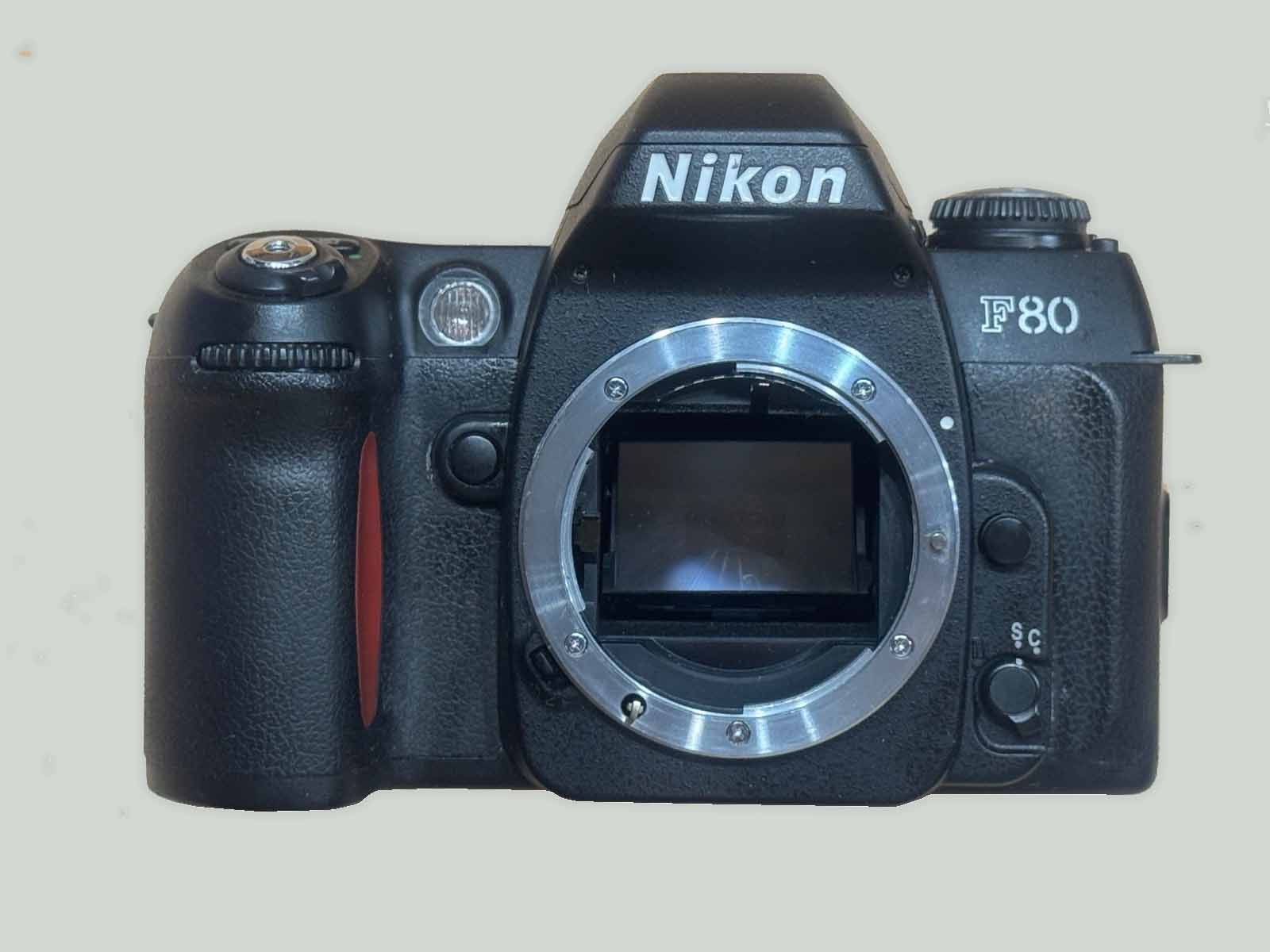
I bought a Nikon F80 on eBay. The F80 was released in 2000, nine years after the Nikon F801s. The F801s model was itself an update to the F801 that was released in 1988. The updates were to improve the autofocus and the metering. And these improvements were carried over to the F80 and its bigger brother the F100 that was released in 1999.
The F80 feels softer to the touch compared to the F801s, reflecting the evolution in the use of plastics.
So I took a chance on the F80 on eBay and put a roll through it to see what problems it had or didn’t have. I got the scans today and these shots from the test roll. Thankfully it seems to be OK.
Not so the F801s, which I will write about later.
Plastic Cameras
I shot film before digital cameras came out, and I still have a Nikon FE, a manual focus camera that was released in 1978.
The Nikon FE has an all-metal body, and in the ensuing decades from the late 80s through to 2000 Nikon cameras went from all metal to a skeleton framework of metal with a polycarbonate plastic body hung around it.
More recently Nikon started using CFRTP, a carbon fibre reinforced plastic that gives even more rigidity.
However, tucked in that change from metal to plastic was the release in 2001 of the last of the manual focus, metal bodied Nikon cameras – the Nikon FM3a.
The FM3a was the last in a long series from the FE, FE2, FM, FM2 and FM2n.
The FM3A was already an anachronism when it was released because the world had moved on to autofocus, and it was a luxury item out of its time. A good secondhand FM3A on eBay today will cost around £800. A Nikon FE is much cheaper – around £150.
My Nikon FE
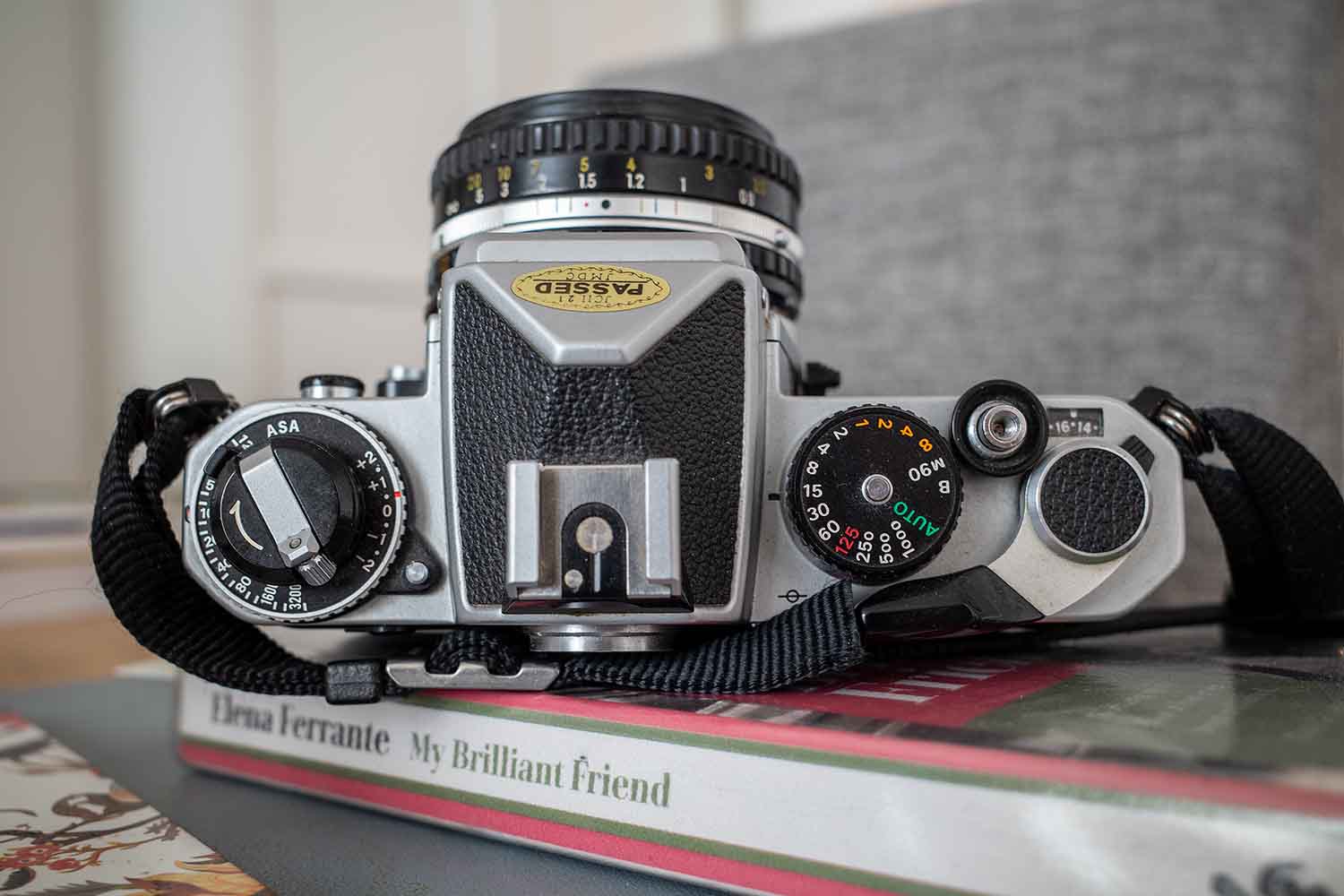
This is the top plate of my Nikon FE. It uses one little Mallory cell to power the exposure meter, and that lasts about a year of normal shooting. To take a reading you half cock the wind-on lever and that activates the meter. Then you adjust either the aperture on the lens or the shutter speed on the dial on the top plate until the needle and your settings coincide.
As long as you remain in similar lighting conditions you can leave that where it is once you have set it. If the lighting changes you have to reset the exposure.
After a while you get into the habit of keeping an eye on that floating needle in the viewfinder.
The next thing you have to do is to focus the lens while looking through the viewfinder.
The viewfinder has a little circle in the centre that is split into two. One half of the circle shows whatever you are pointed at and the other is how far distant the lens is focused.
To focus, you twist the lens until the two halves of the circle coincide and you can see all of whatever you are pointed at in focus.
And that’s why I wanted the Nikon F80. It has automatic exposure and autofocus.