
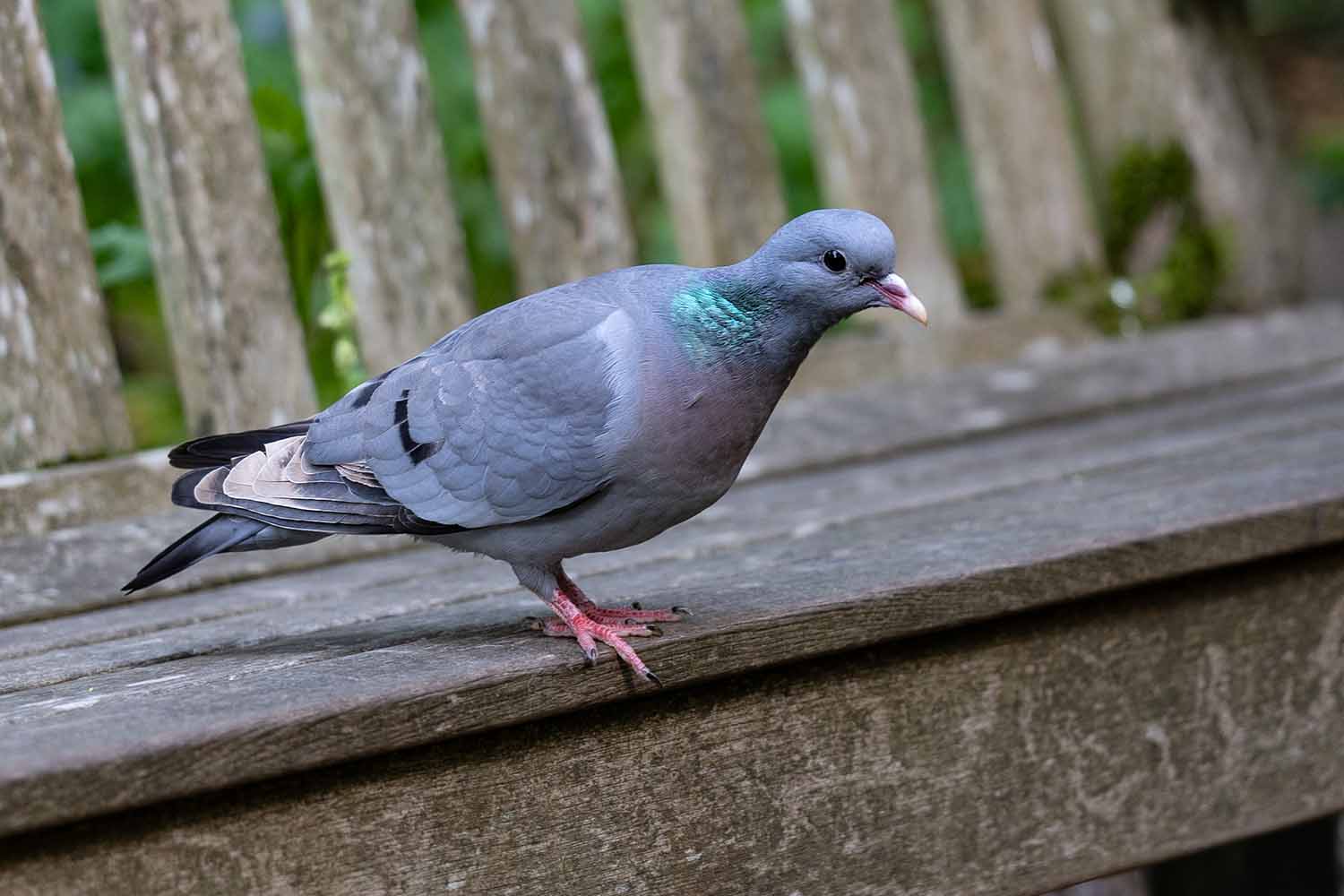
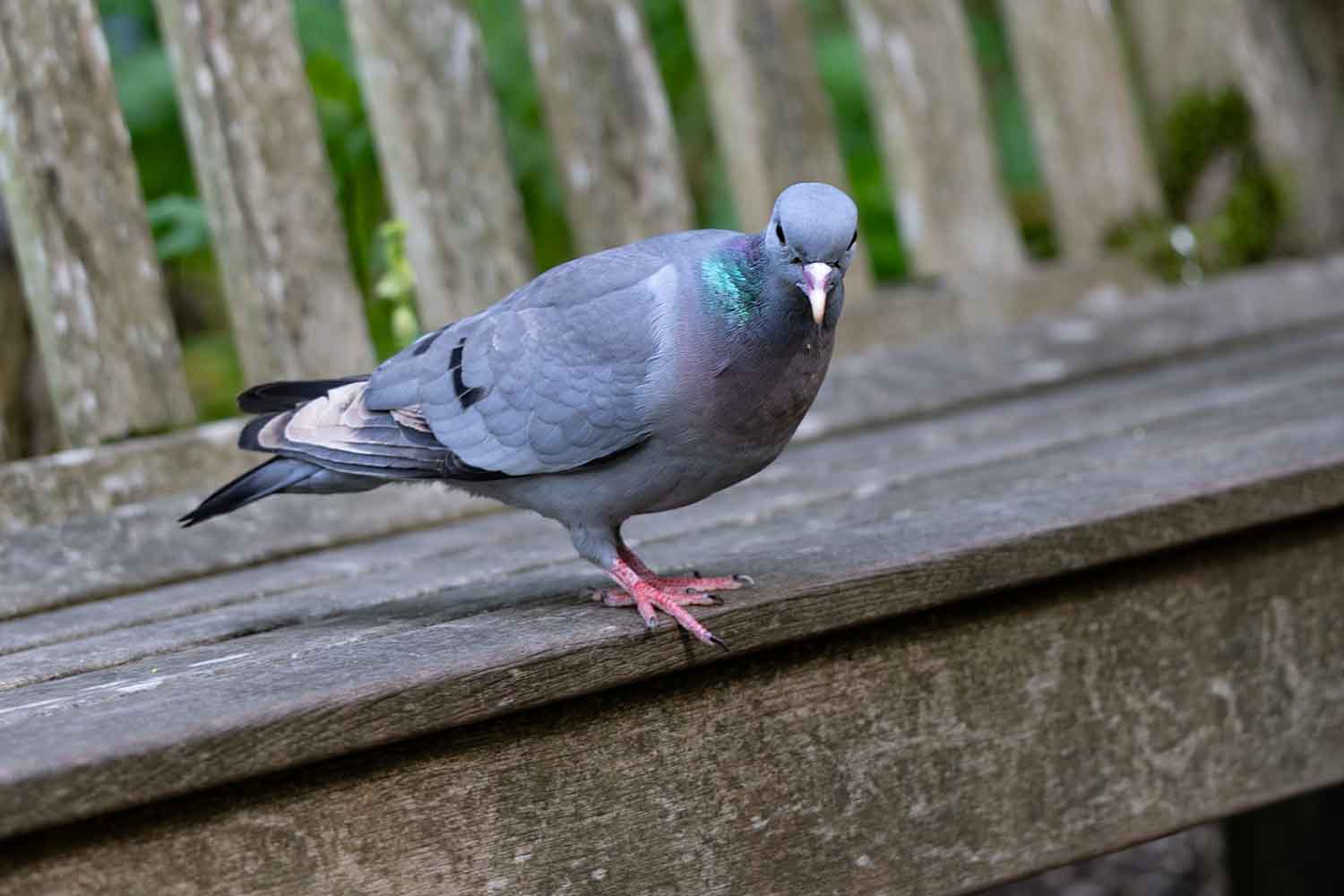
A couple were sitting on a bench at Kew and I stopped because of the slender pigeons or doves on the ground by them.
The man said “Stock Dove?”
I nodded with less confidence than I would have had had I been certain – but more because it seemed they had to be because they were not Wood pigeons, nor were they Collared doves, nor Turtle doves.
And yes they were Stock doves – (Columba oenas) described as
“a medium-sized pigeon with a blue-grey plumage, a pink chest, and an iridescent green patch on its neck.
Stock Doves nest in holes in trees or farm buildings and are commonly found in woodland edges and parkland, especially during the breeding season.”
Well I can tell you they are not ‘commonly’ found anywhere. I am pretty sure I saw them years and years ago, but never since.
Doves v Pigeons
Wood pigeon – Columba Palumbus
Rock dove – Columba livia
Stock dove – Columba oenas
Collared dove – Streptopelia decaocto
Turtle dove – Streptopelia turtur
Doves and pigeons both belong to the family, Columbidae. Within that there is the genus Columba and the genus Streptopelia.
But as you can see from the list, the common use of ‘pigeon’ or ‘dove’ doesn’t follow the science.
If it did then the Rock dove would be known as the Rock pigeon, and it’s not.
Many feral pigeons have that iridescent green patch, but the Stock dove is more slender. If I were to put Stock doves on a sliding scale of appearance, then Collared doves and Turtle doves are by far the most slender of all, then Stock doves, then feral pigeons and then the pigeons that are almost Wood pigeons or indeed Wood pigeons.
I say ‘almost’ because in any group of pigeons that you can see all over the place in urban areas, there is usually a mix of types, and ‘almost’ Wood pigeons is one of the types. They have the white neck patch but the feathers show a mix of types.

Leave a comment