Tamara and I went on a one-day tree identification course at the Botanic Garden here in Cambridge. Poking around the leaves of a tree, I noticed mistletoe growing out of a branch. I am used to seeing big clumps of mistletoe in the upper branches of trees, but never at eye level before.
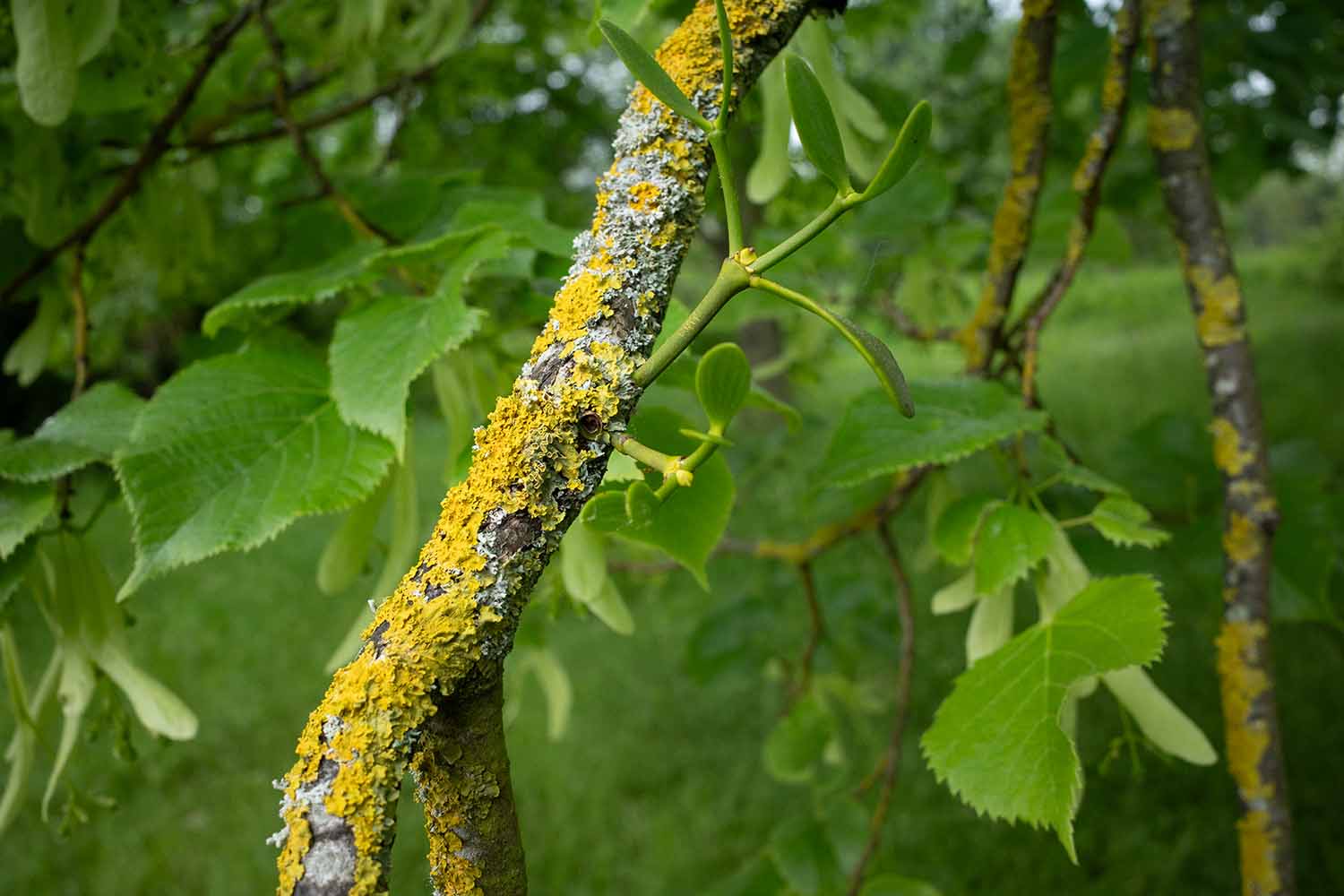
And here is a crop showing the mistletoe more clearly.
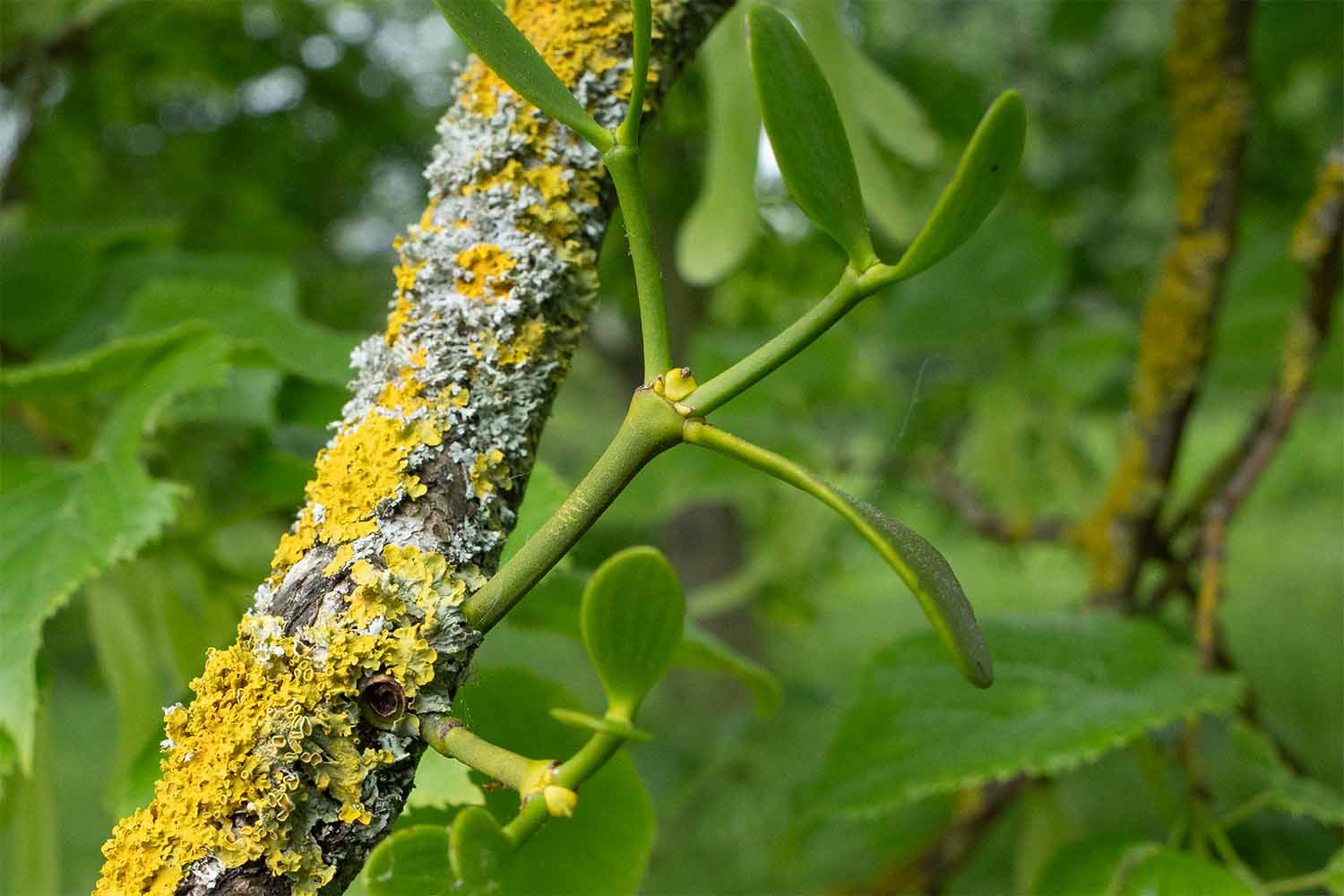
Mistletoe (Viscum album) is an evergreen plant that with white berries in winter. It is a parasitic plant that lives off the nutrients and water from a host tree. And although it is parasitic, it will generally not kill the host tree but it can weaken it.
There are lots of clumps of mistletoe in trees in Cambridge and in Oxford when we visited some years ago. I got the idea that the Colleges had encouraged the plant because of its religious association. Now I read that the plant has an association with Druids and Norse folk beliefs rather than Christianity, so bang goes another of my theories.
Still, there is the association of kissing under the Mistletoe at Christmas, so maybe there is a Christian association.
The berries are often spread by birds from one tree to another, which is how the large rounded clumps of mistletoe grow in trees.
Someone told me that blackcaps have a habit of pushing mistletoe seeds into cracks and crevices in trees, which spreads the plants. I don’t know why that species of bird does it, but an article in The Wildlife Trusts mentions blackcaps and thrushes eating the berries, so the idea of blackcaps pushing the seeds into cracks in trees may well be accurate.
 (Knew there was something wrong about the sound of it, but in a hurry, yeah?; )
Leave a reply to Deb Weyrich-Cody Cancel reply