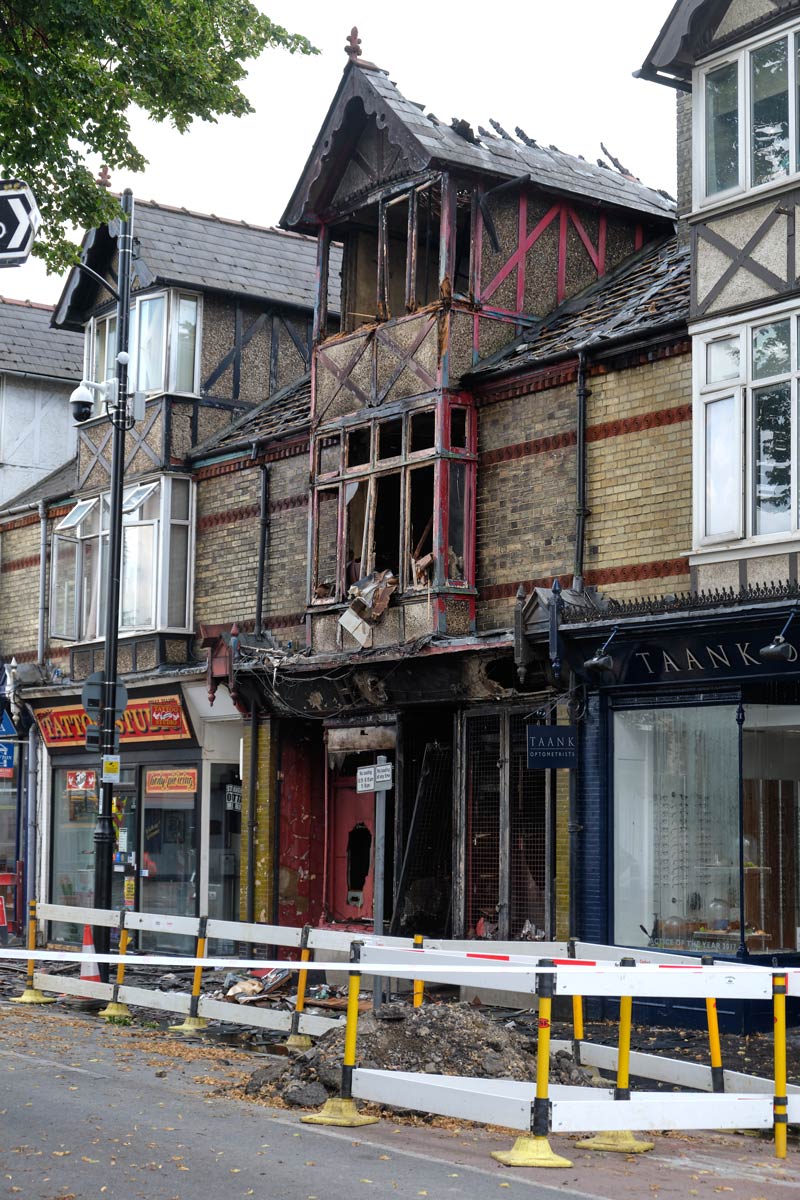
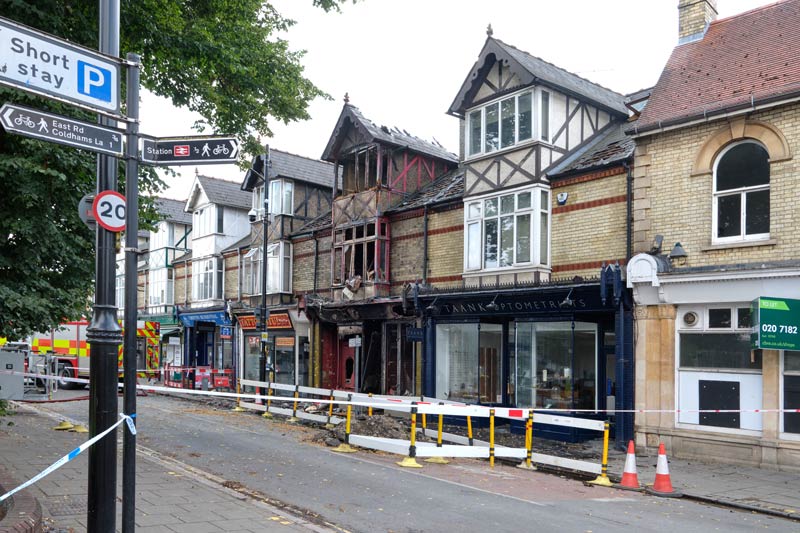
Why did I take the photos of the burned-out shop on Mill Road? I had the camera with me, and I was drawn as though on rails to the scene of the fire.
Earlier, when I was further down Gwydir Street I saw a woman explaining to a motorist that the car would not be able to exit onto Mill Road. I thought she meant because of the roadworks. I wasn’t sure whether she meant pedestrians as well as motorists, because I could see a police car parked way down at the end of the street.
I thought then perhaps someone had been injured, a crime or an accident.
I was on my way to the Visitor Centre at the David Parr House on Gwydir Street and I wasn’t sure whether that was beyond the crossroads or before it. In the event, it was before the crossroads and when I went in the woman who runs the Centre explained that there had been a fire on Mill Road in an empty electrical shop.
She said the woman who owned the shop had been taken ill a few weeks before and so the shop was empty. And she had been a local character and the shop was very old. And her husband had died from a heart attack not long ago.
Now I read that the shop was named H Gee Electrical and that it took fire crews 19 hours to tackle the blaze, and that nearby residents had to be evacuated from their homes, and were given shelter at the Islamic Centre on Devonshire Road and the Earl of Beaconsfield pub.
I saw a blaze once. A big building with flames reaching up into the sky. I thought at the time it seemed unreal – people standing, looking, and the building the most energetic thing in the scene.
When I think of the Blitz in London during the war, I am in awe of the resilience of people who had to live through that bombing. And not just one night – two months of it.
Were they hardened, made stronger, weaker, more troubled, more found, by the experience?


Leave a reply to writemeow Cancel reply