Photography, the act of taking a photograph, is a compromise. You generally want the highest image quality and you want to freeze the action. And you want the depth of field – the front to back distance that is in focus – to be what you want in order express your ideas.
The problem is that when you can’t control how much light there is – which is the case when you are on the street – then you maybe can’t have shutter speed you want, the aperture you want, and the ISO you want. They are all fighting one another.
And the one parameter that everyone shies away from is increasing the ISO too much. The belief is that once you increase the ISO, the image quality degrades.
With a modern APS-C sensor camera you can use ISO 400 confidently. But how about ISO 6400?
Let’s take a step back and see how those two ISOs relate.
Different cameras have different base ISOs. Some start at 100, some at 125, some at 160, some at 200.
Let’s start with ISO 100. Each doubling of ISO doubles the amount of light the sensor reacts to.
100, 200, 400, 800, 1600, 3200, 6400
ISO 6400 reacts 64 times as much as ISO 100.
If I shoot at ISO 6400 I can increase my shutter speed and keep the aperture the same and that means I can freeze action more than with a slow shutter speed.
Photographers tend not to shoot at ISO 6400 all the time because camera sensors lose signal and gain noise at high ISOs.
Colours start to wash out, contrast reduces, and the image looks plain worse.
That’s the wisdom passed down.,
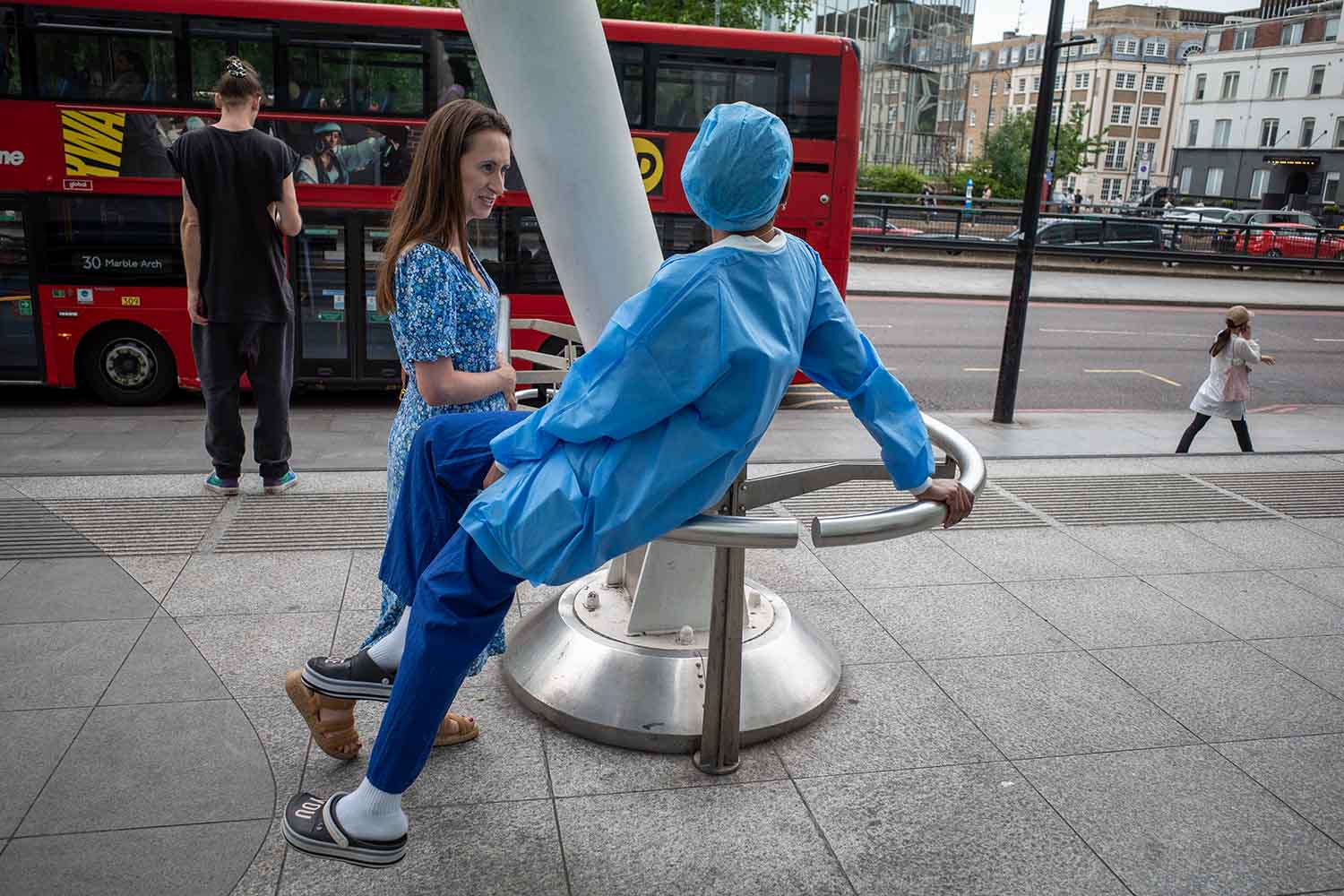
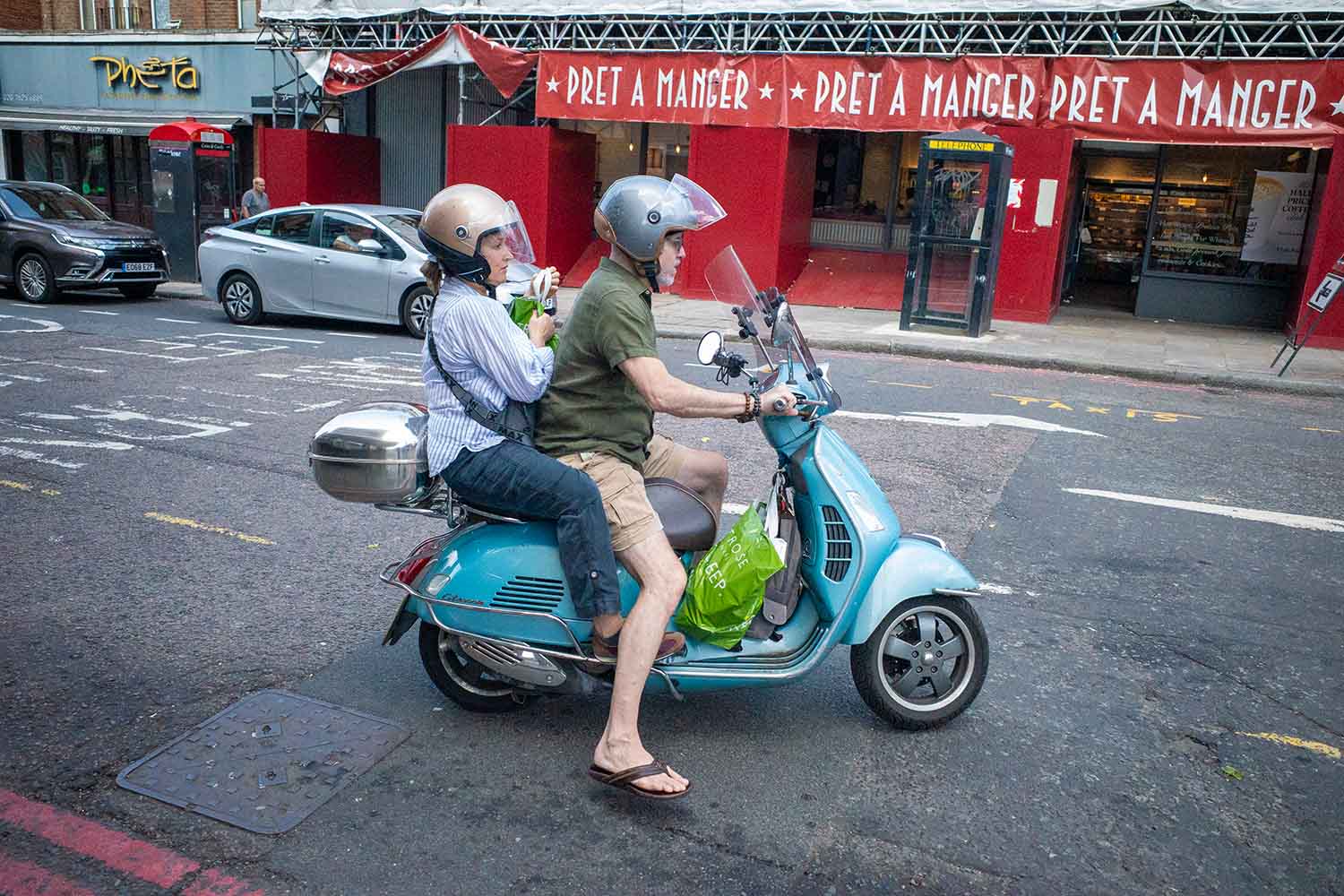
And here is the reality when I decided to bump the ISO to 6400 with a Ricoh GR III, a camera with an APS-C size sensor.
In this first shot the ISO is 400, which I ofter use.
But in the second shot – of the couple on the moped – the ISO is 6400.
Maybe the terror of high ISO is misplaced.
If so, then I can freeze action with higher shutter speeds. And if and when I am in the market for a new camera, I canthink about cameras that do not have in-built-image-stabilisation because IBIS is irrelevant with fast shutter speeds.

Leave a comment