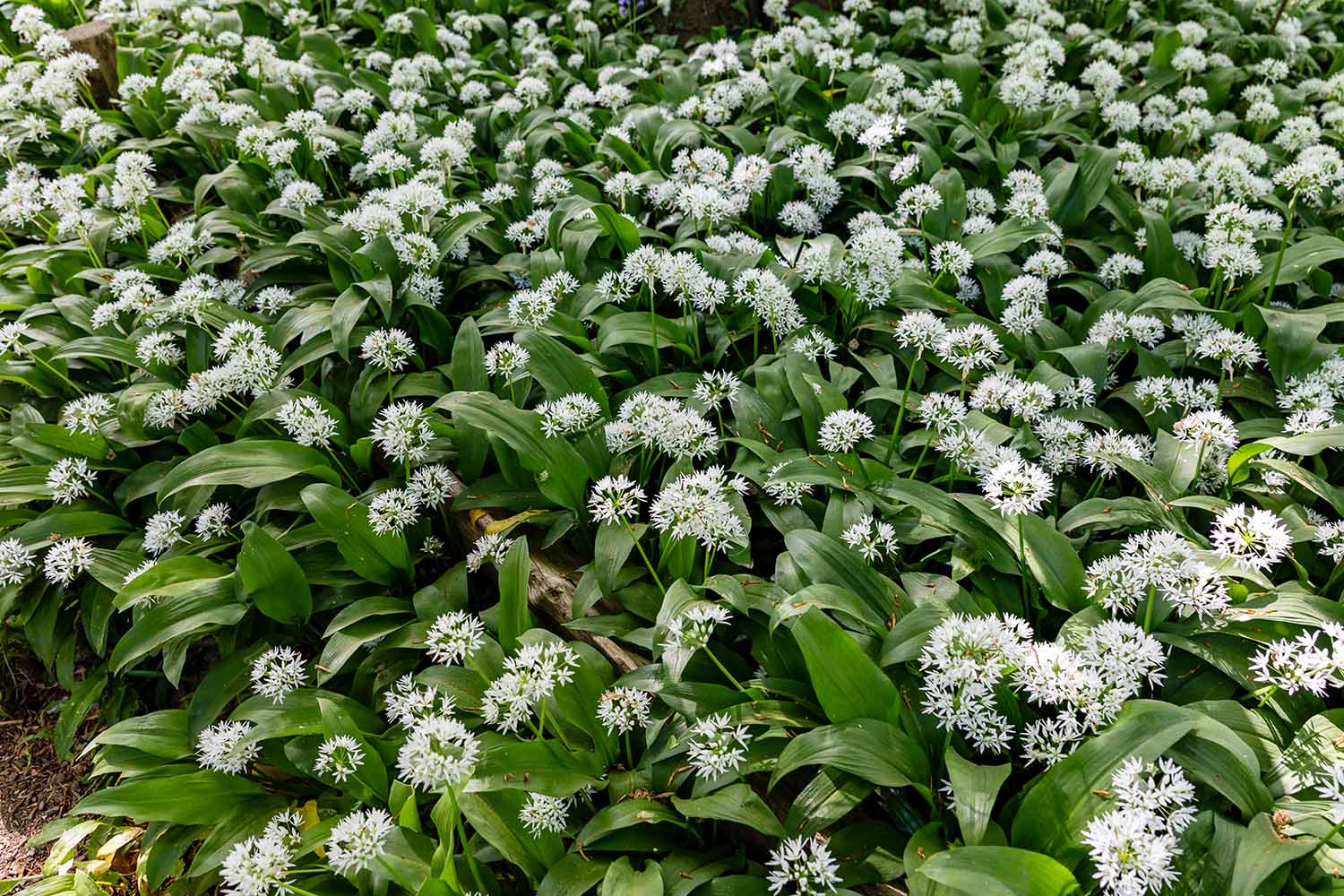
This is Allium ursinum or European wild garlic. It has many Common names, including bear’s garlic, ramsons, cowleek, buckrams, broad-leaved garlic, and wood garlic.
The Latin name too – Allium ursinum – reflects the fact that bears are known to like garlic. Ursus is the Latin for bear.
You will know when you are near a patch of the plant because its smell is very evident. I photographed this patch at Kew Gardens a few days ago.
However, there’s another kind of wild garlic at Kew, and it is an invasive species (Allium paradoxum), the few-flowered garlic.
Allium paradoxum is called “paradoxum” because the botanist who first described it, Marschall von Bieberstein, found it paradoxical that the plant he thought was a type of lily also smelled like garlic and produced little bulbs.
Now we know it is not a lily at all, but in the onion family that includes regular onions and spring onions, shallots, garlic, leeks, and chives.
Allium paradoxum is an Asian species native to the mountainous regions of Iran, the Caucasus, and Turkmenistan.
It is distinguished by its narrow leaves, unlike the broad leaves of the UK’s native wild garlic, and tiny bulbs.
And it is crowding out the bluebells in the woods at Kew Gardens.
It was introduced to the UK by collectors in the 1820s, and now it is rampaging everywhere.
Allium paradoxum is listed on Schedule 9 of the Wildlife And Countryside Act 1981 and is illegal to plant in the wild.
When I was at Kew the gardeners were painstakingly picking up the small bulbs of the invasive garlic to let the bluebells move back in.

Leave a comment