
Lemons are yellow; limes are green. They are both sour in their own way, and they taste different one from the other.
There are several species of trees whose fruits are called limes, and they are almost all in the citrus family.
And then there are lime trees that do not produce limes and that have nothing to do with lime, the fruit.
All they share is the Common name.
In England they are called lime trees and sometimes linden trees. In mainland Europe they are called linden trees, and in the USA they are called basswood and sometimes linden trees.
And they are all of the Tilia species, and there is a logic in the name.
Let me explain.
The name basswood is a corruption of bast, which is the inner layer just under the bark of a tree. All trees have bast, but what singles out the bast of the basswood tree is that it has a fibrous, tough, flexible bast. Native Americans made cords and ropes with it.
And that quality of the bast underlies the words lime and linden because they are corruptions of the Old Latin for ‘flexible’ which is a quality of the wood that comes from the pliability of the bast.
Tilia species are easy to recognised by the shape of the leaves, which are heart shaped and asymmetrical. The lobes of the leaf are unequal, with one longer than the other.
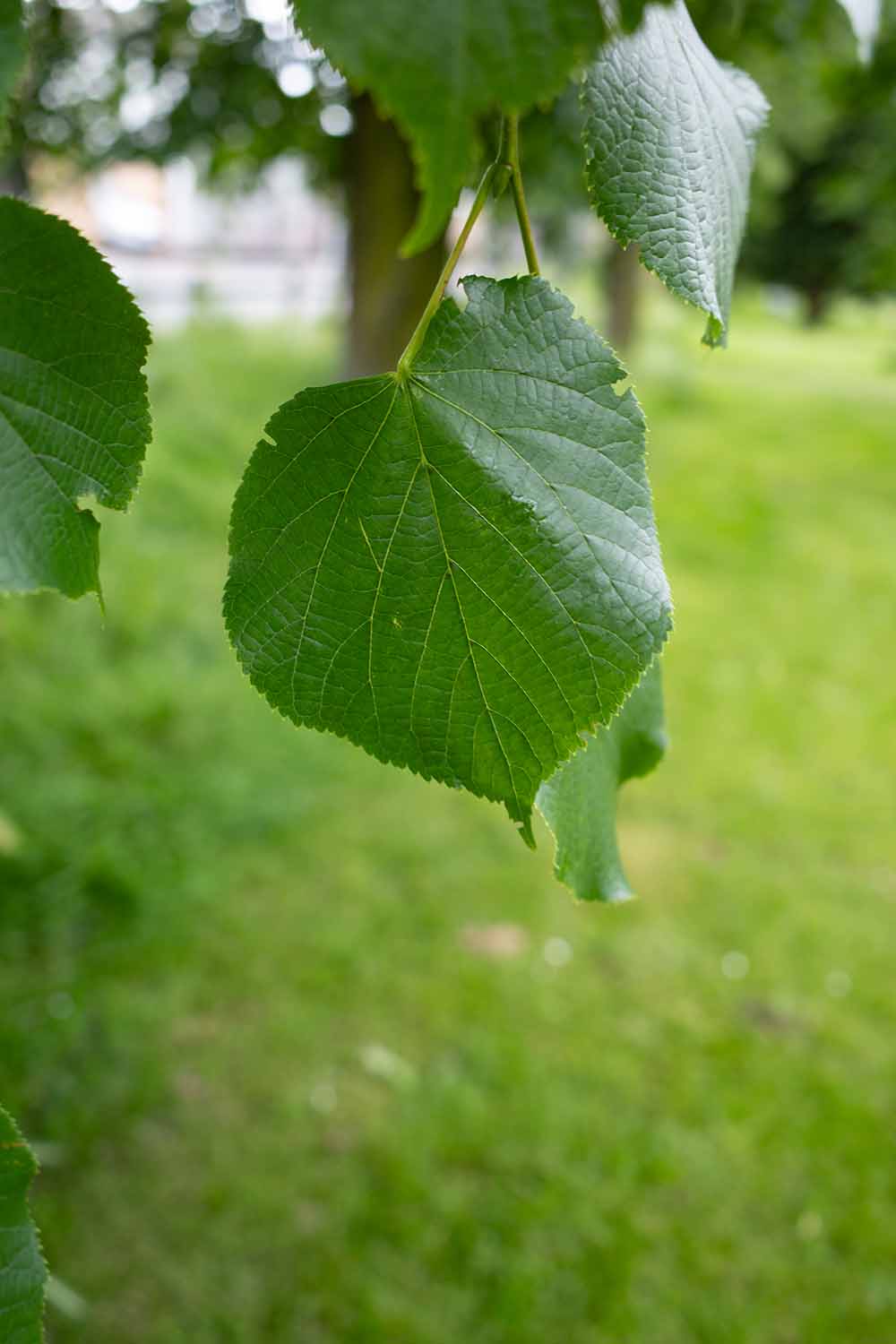
In Britain we have three species of Lime trees. We have the small leaved lime, the large leaved lime, and the hybrid that is called the Common Lime although the Common Lime is rare in the wild..
The Latin name for the small leaved lime is Tilia cordata. See, here is the word ‘cord’ again.
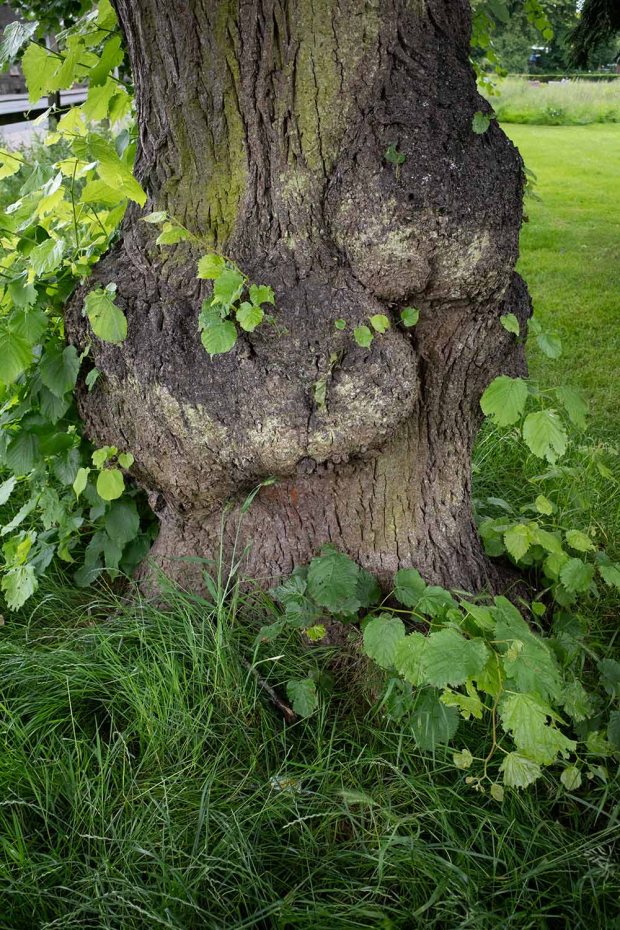
Something else about lime trees that can help you recognise them is that they grow large burrs, known as epicormic growths. They grow near the base of the trunk and have shoots growing out of them, as you can see here.
Tilia Henriana
Here is an unusual lime, Tilia Henryana.. It is unusual because it has spiky edges to its leaves. But you can tell it is a lime because the two lobes of the leaf are unequal as you can see.
Its common name is Henry’s Lime after Augustine Henry, who brought it back from China after discovering it in 1888.


Leave a comment