
Here is a photo of a mara at Whipsnade Zoo that I shot with a Nikon D500 and 70-300mm lens. The camera was great except for the weight. It weighs 860g, (30.34 oz). That’s a lot of camera. It felt as solid as a tank and every button felt perfect.
But it was such a beast that except for shooting from a jeep in South Africa and visits to Richmond Park and Whipsnade Zoo near London , it was just too heavy to carry around.
And that’s the body only. Put a AF-P NIKKOR 70-300mm f/4.5-5.6E ED VR lens on it and that’s another 680g (24 oz).
860 + 680 = 1540g or more than 58 oz.
Still, it takes good photos – look at the crop of the ears of the mara.

You may be asking yourself why some dSLR cameras are so heavy.
The answer is that not all of them are. But the ones (like the D500) that have big viewfinders and great autofocus are heavy. They have a big mirror box. It contains a glass prism and a mechanism that lifts the cover that sits over the sensor out of the way and then drops it down to cover the sensor after you have taken the shot.
Remove that mirror housing and replace it with an electronic viewfinder of the scene and you save a lot of weight.
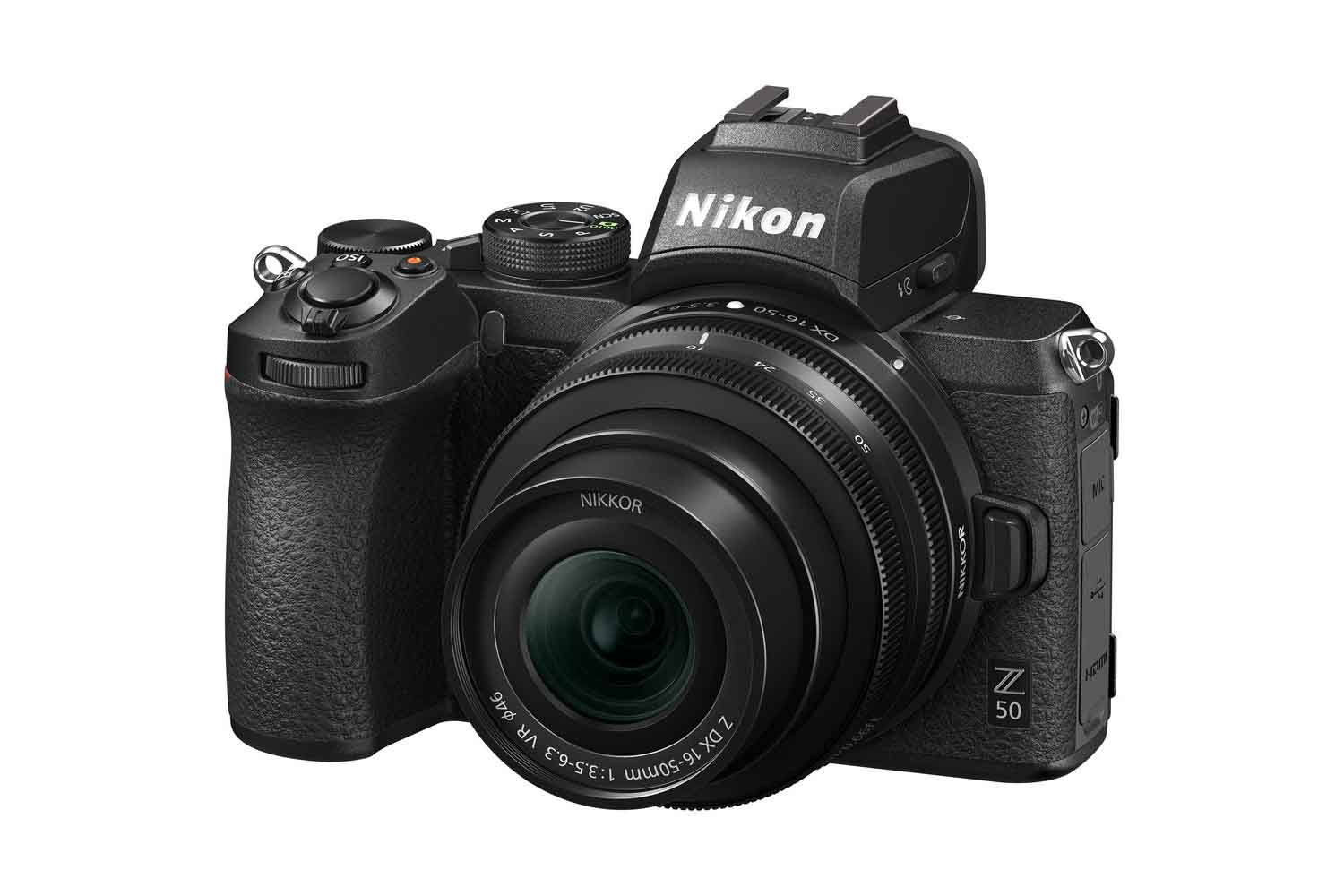
The Nikon Z50 weighs a mere 450g and it has the same sensor as the D500.
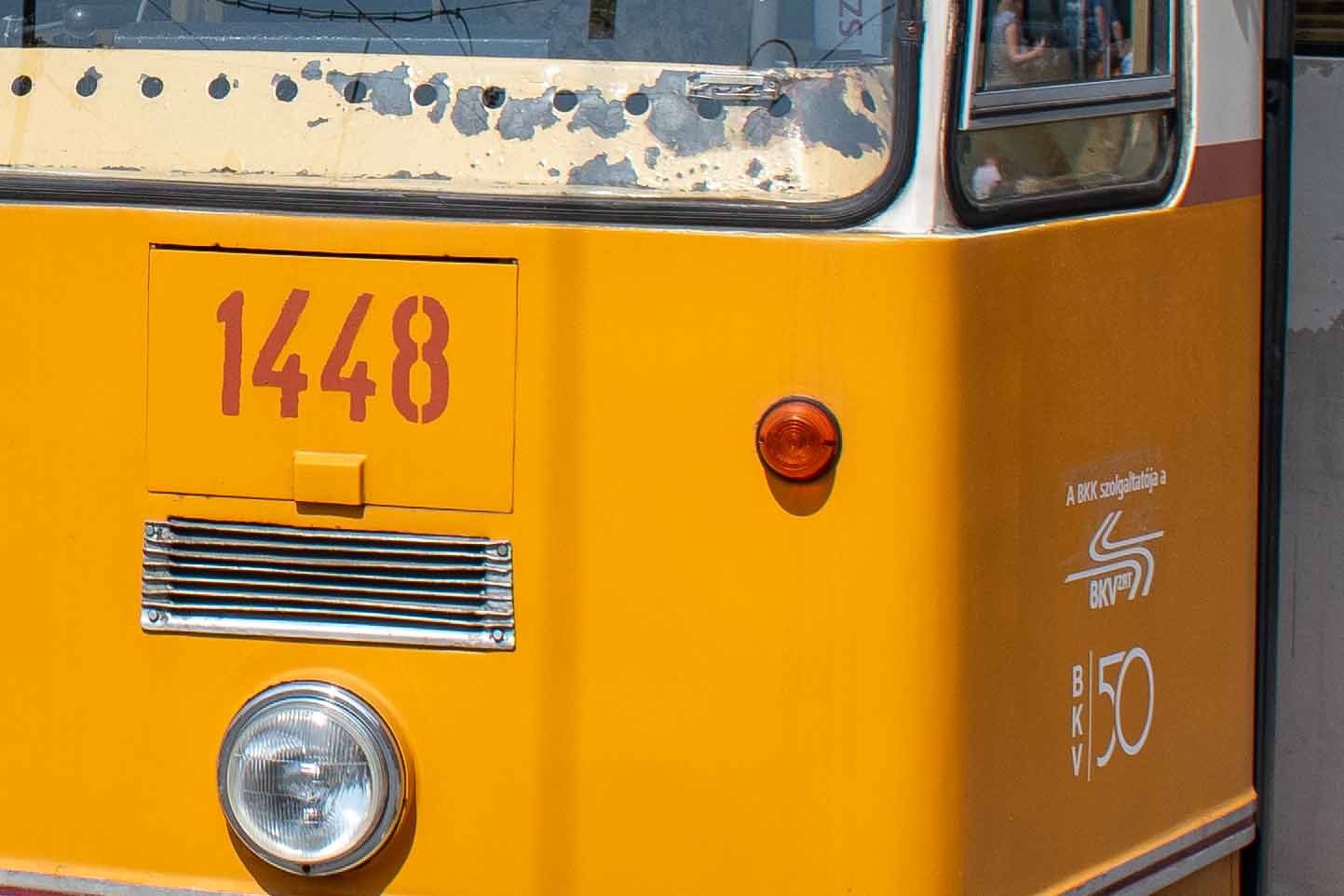
That said, here is a photograph of trams in Budapest taken with the D5600 and the kit 18-55mm lens, and it looks pretty good to me. The crop of the front of the tram is holding detail, as well.
Really the only downside of the D5600 is the tiny viewfinder. A pleasant experience of looking at what I am photographing is the most important thing I want in a camera. If I can’t see it clearly or if it feels like `I am looking down a tunnel, then taking the shot is a painful experience.
Of course image quality and being able to alter settings are important, but I want to be able to see what I am intending to photograph.

And that brings me to mirrorless cameras. The viewfinder on the Z50 is not as big as on its big brothers – the Z5, Z6, Z6 II, Z7, and Z7 II – but then there’s the weight. The big brothers come in around 700g.
I went into my local camera shop a few days ago to look through the viewfinder of the Z50. And it is small – not too pleasant. Not as bad as the D5600 but really quite small. The bigger brothers have viewfinders so big your eyes can wander around inside them and look at the scene. The more I photograph the more I think that a good viewfinder is top of the list of things that have to be right on a camera I want to enjoy using.
The big brothers to the Z50 have image stabilisation built into the bodies. The Z50 does not. The big brothers have dual card slots, whereas the Z50 has only one card slot.
If you are on a once-in-a-lifetime trip, or a live event then saving images to two cards simultaneously is a good backup plan – which is precisely why some cameras have two card slots.
Fuji X-T Models
Then there’s the little Fuji X-E3 with the 27mm f2.8 lens. That seems to have enough going for it It’s too small to handle a long lens but its bigger brothers like the X-T3 has the same sensor and that could handle more or less any lens.
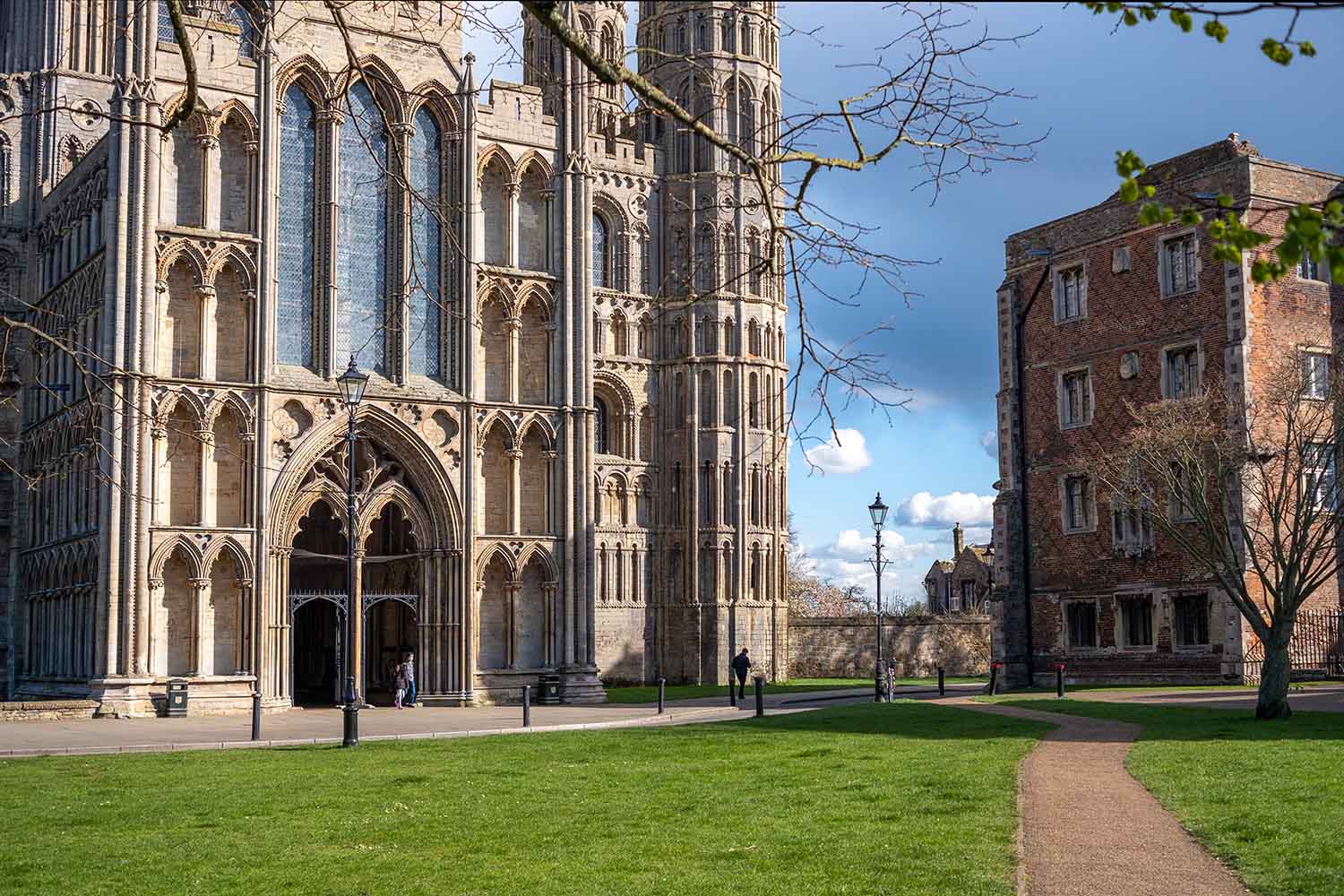
This is Ely cathedral shot with the X-E3.
I Made A Choice
I thought seriously about a full frame Nikon Z6 II but in the end I decided that the weight would defeat me. So I have bought a second hand Fuji X-T3 and a Fuji 35mm f2 lens.
Fuji X-T3 = 539 g (including battery and SD memory card)
Fuji 35mm f2 lens – 170 g
Total – 709 g
That’s about 350 g lighter than a similar Nikon Z setup. And I don’t have buyer’s remorse.
The X-T3 has two card slots so I can write to two card simultaneously for a little added safety when I am somewhere where it would not be possible to reproduce the shot later. And the viewfinder is big so I can take a good look at the scene.
I’ll let you know how I get on with it.

Leave a comment