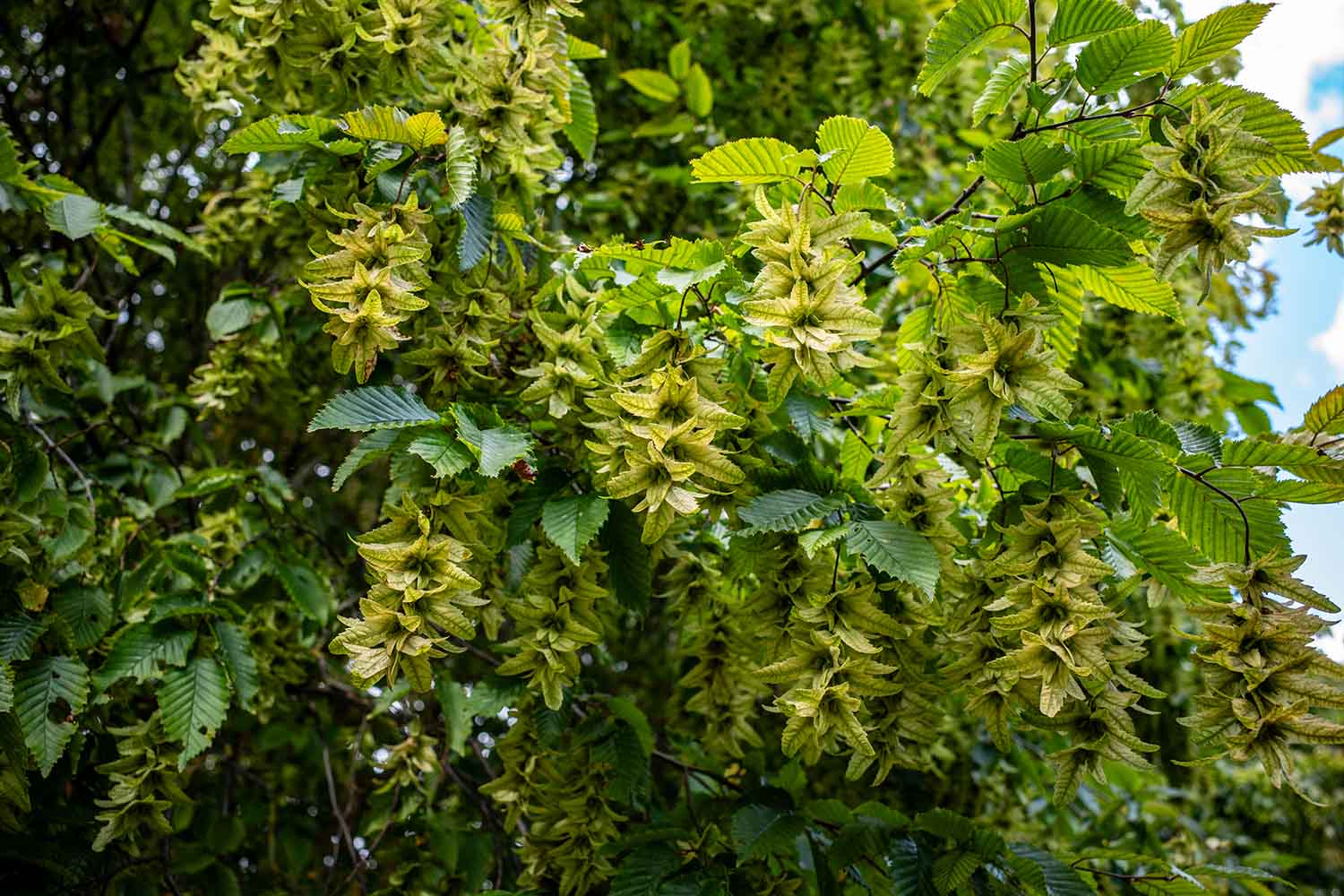
The European or common hornbeam (Carpinus betulus) is native to Western Asia and central, eastern, and southern Europe, including southern England.
There are not many trees native to England, but lots of imported species because of the great wanderings that English explorers did in previous centuries.
The reason there are not many native species is that when the ice sheet spread south in the last Ice Age, the trees that could not survive the cold died out. And then when the ice retreated, the trees advanced northwards. Except that any trees south of the Alps could not cross because of the colder weather on the higher slopes. So the species didn’t come back.
Contrast that with the north-south run of the Rockies or the Appalachians that allowed trees to advance northwards after the last Ice Age.
The Hornbeam
To get back to this tree species, it has very hard wood and leaves that are similar to Birch – and it is in the Birch family. It doesn’t grow that tall – maybe 15-25 metres (49-82 ft).
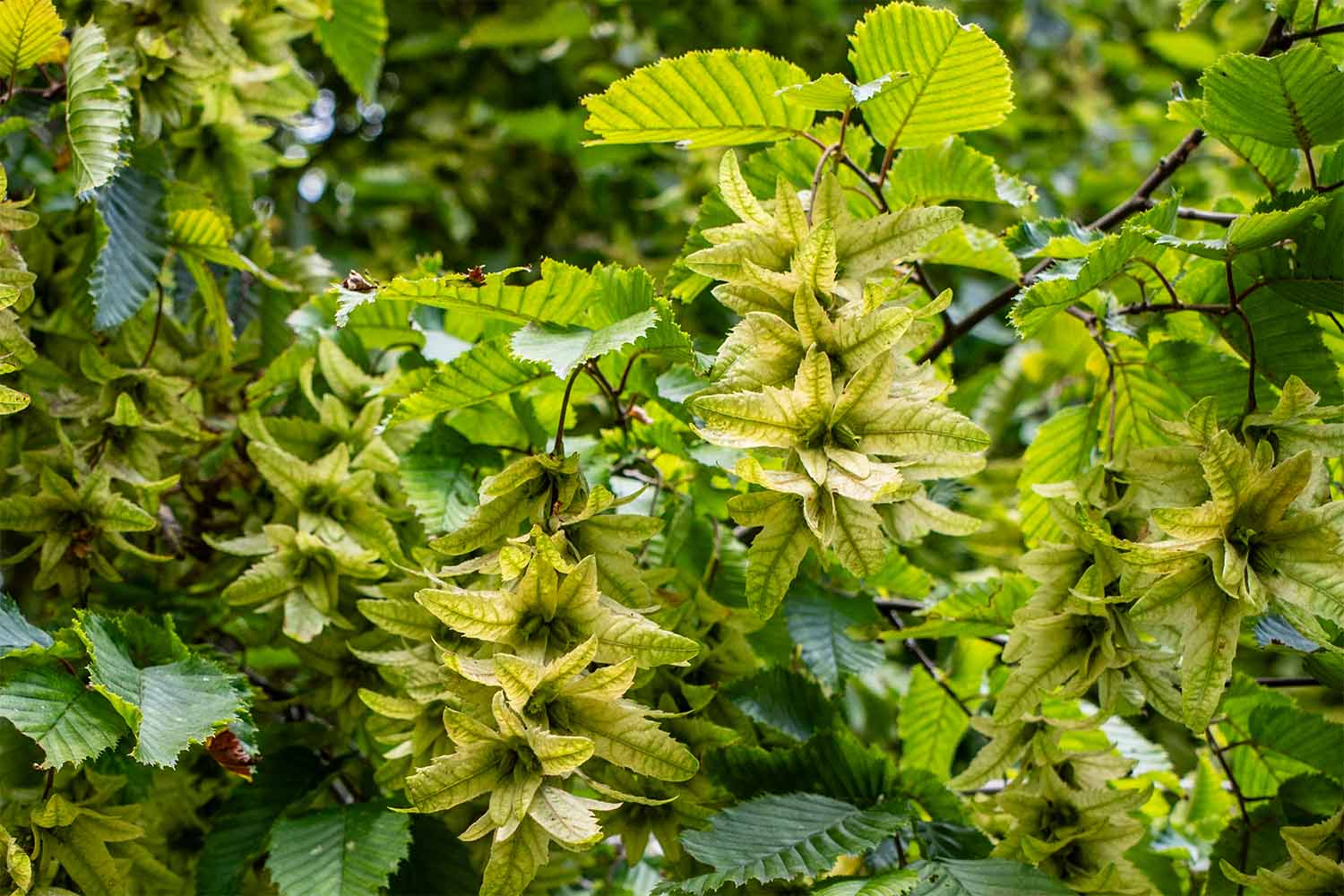
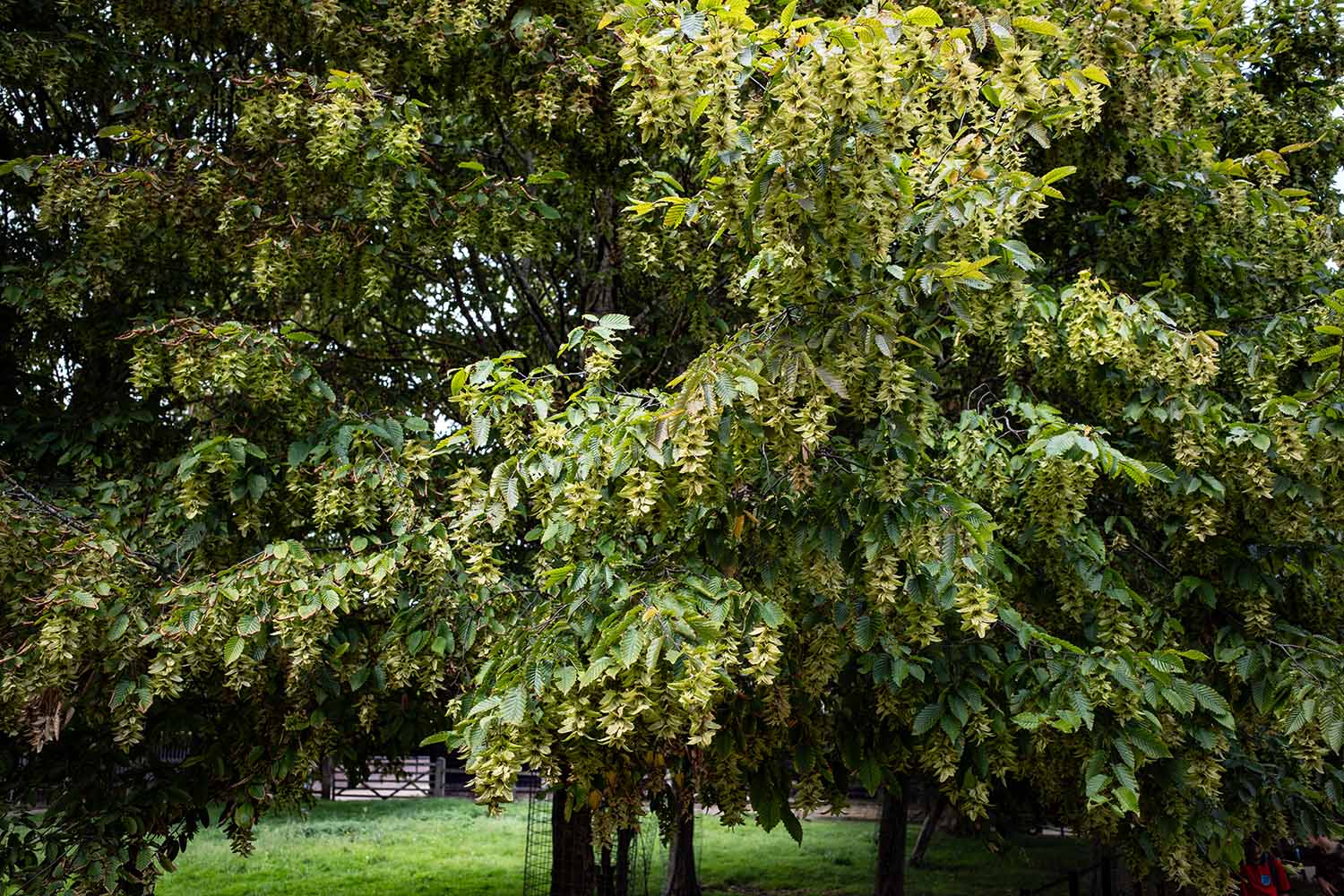
This year the trees in Wimpole Hall near Cambridge have huge amounts of fruit – a small long nut, partially surrounded by a three-pointed leafy involucre.

Leave a comment