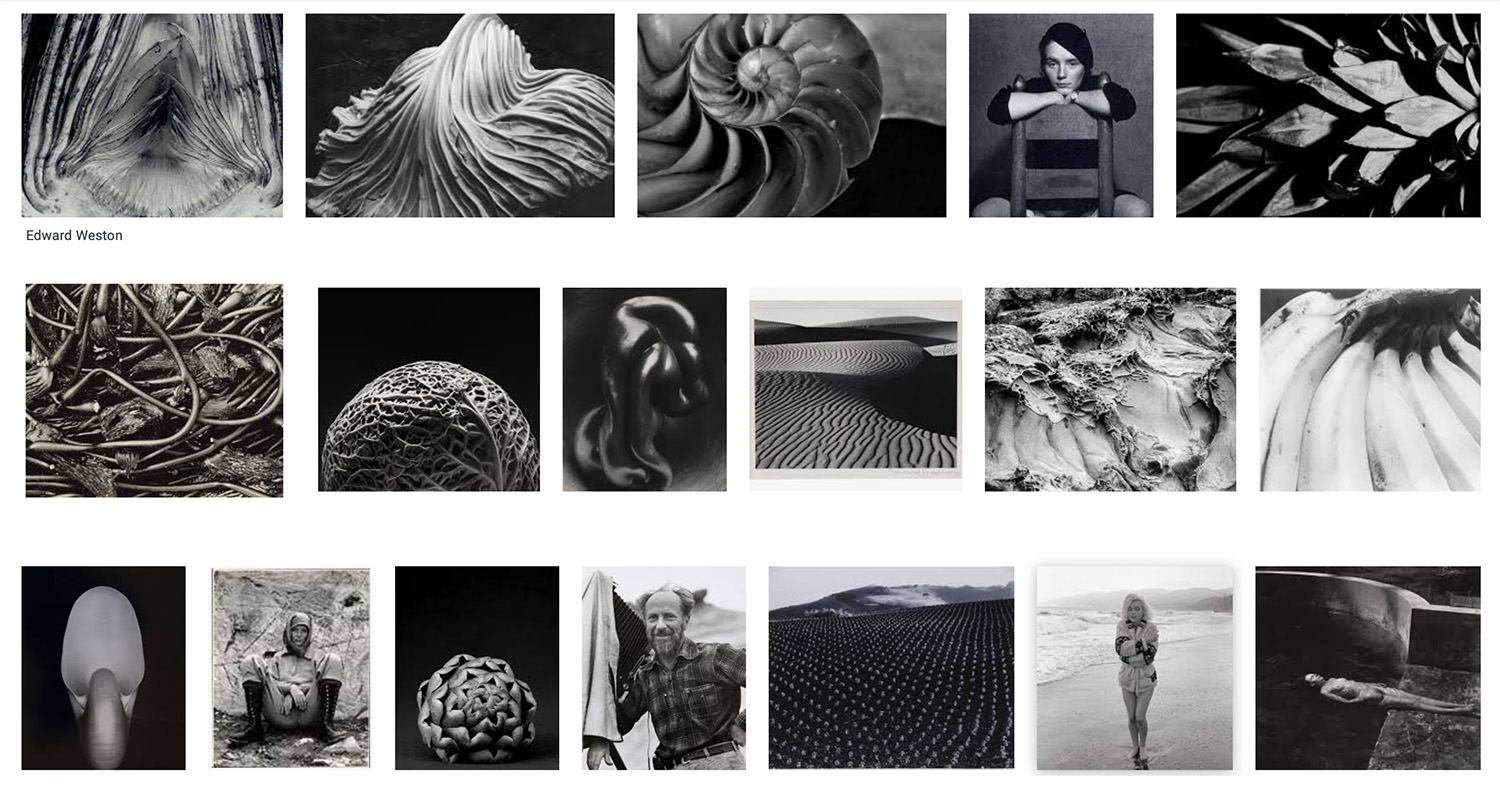
Edward Weston (1886 – 1958)
Walker Evans (1903 – 1975)
Edward Weston and Walker Evans are two famous American photographers who were roughly contemporaries, but followed different paths.
A lot of Weston’s work is him looking the essence of things. That is things rather than people.
You can imagine him wondering how a cabbage leaf looks if you turn it this way and illuminate it in this way? You can imagine him wondering how he could extract a view from the thing that stops the viewer and makes them look.
He is quoted as saying:
“If there is symbolism in my work, it can only be the seeing of parts fragments as universal symbols. All basic forms are so closely related as to be visually equivalent.”
It’s true, in some ways, I guess. We see shapes echoed in nature in seashells and fruit and flowers and endless features of the natural world. We recognise nature whether it is in a grain of sand or mountain. Maybe he is saying something deeper – that the thing in the world is a reflection of the essence that is beyond the world.
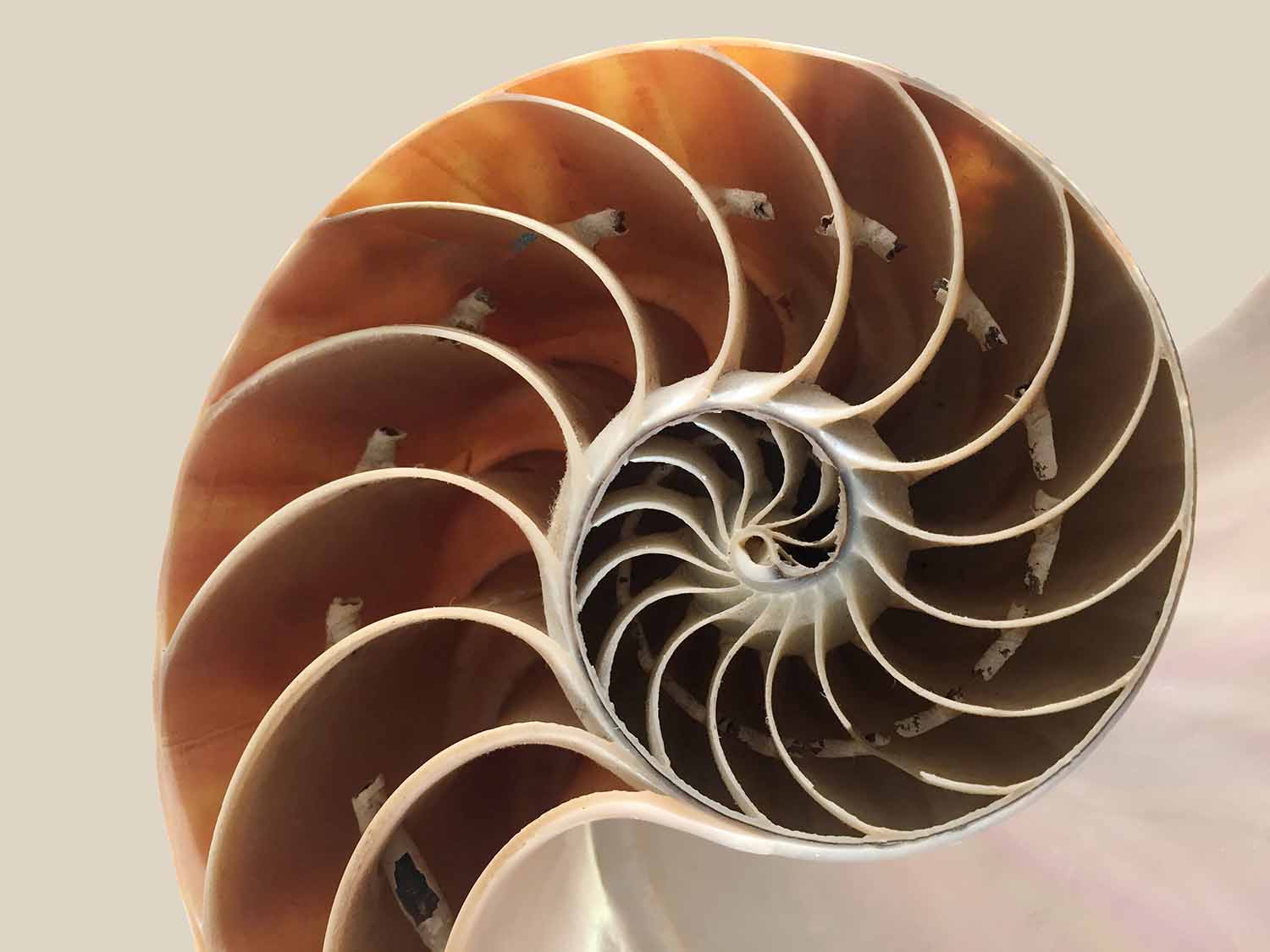
Not surprising then that Weston photographed nautilus shells.
Walker Evans is a different kettle of fish. A big part of his work is from when he worked for Farm Security Administration, an American Government agency set up under Roosevelt’s New Deal from 1933 to 1939. The brief of the agency was to help pull people out of the poverty of the Great Depression. And the FSA’s brief for Walker Evans, Dorothea Lange, and others was to document the effects of the Great Depression.
Here are some photos from Edward Weston, and then from Walker Evans pulled from the ‘images’ section of Google. And at the end is a nautilus shell that I photographed in the Museum of Zoology here in Cambridge.
By the way, if you are American, then the Walker Evans photos belong to you. That’s because, originating with a principle laid down by Thomas Jefferson, all documents originating with the American government belong to the people.
It is quite different in the UK, where the people have to ask for permission of the Crown to copy documents that were drawn up or made by the Government or its agencies.
If you want more about the differences, read this: Crown Copyright Restrictions (link opens in a new tab).


Leave a comment